

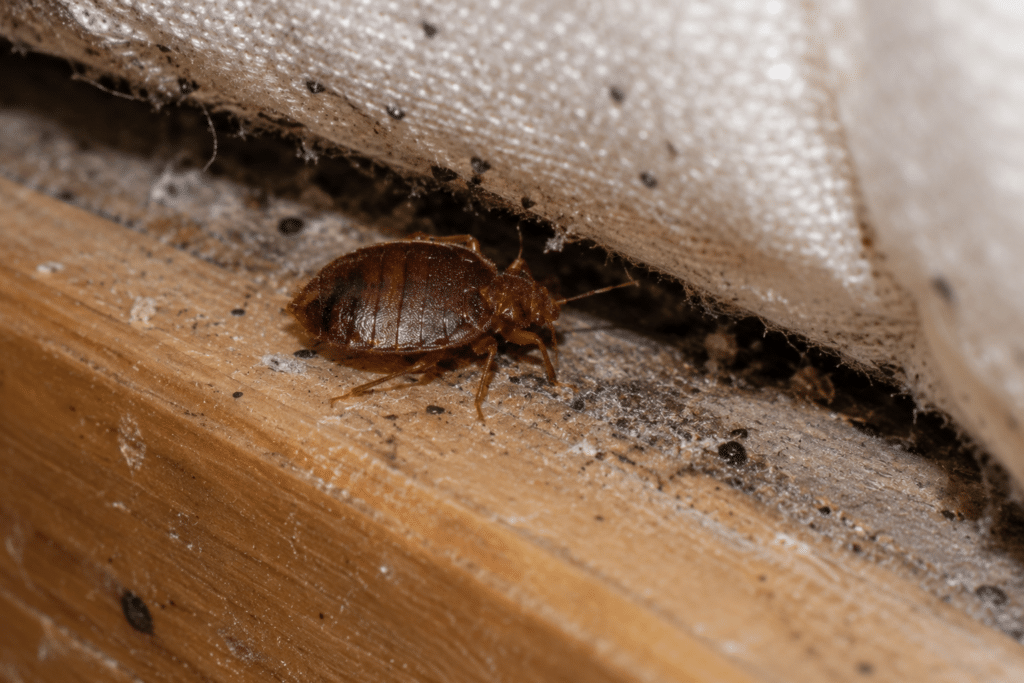
Bed bugs hide anywhere close to where people sleep or rest for long periods. Besides the mattress, the most common hiding spots are the bed frame and headboard, bedside tables, couches and recliners, skirting boards, power points, curtains, picture frames, carpet edges, luggage and even car seats. Most stay within a couple of metres of the bed, but a growing infestation will spread further into the room and beyond.
This is why so many people treat the mattress, throw out the sheets and still wake up with fresh bites. The bed is only where bed bugs feed. Most of the day they are tucked away in cracks and seams nearby, waiting for you to lie down again.
This guide explains where bed bugs hide in Sydney homes, units and share houses, room by room, how to check each spot properly, and why treating the whole room matters more than treating the bed alone.
Why Bed Bugs Hide Away From the Bed
Bed bugs are drawn to the warmth and carbon dioxide people give off while they sleep. They come out to feed, usually at night, then crawl back into a dark, tight space to digest their meal, shed their skins and lay eggs. An adult bed bug is flat, reddish-brown and about the size of an apple seed, and an unfed one is thin enough to squeeze into gaps about the width of a credit card.
Bed bugs cannot fly or jump, so they rely on crawling and on being carried. Anything that sits near a sleeping person, or gets moved from room to room, can end up carrying them. That is also why people who throw out the mattress after bed bugs often find the problem has not gone anywhere, because the bugs were never only in the mattress.
Where Bed Bugs Hide in the Bedroom
The bedroom is still the first place to look. Once you move past the mattress itself, check these spots carefully:
- Bed frame and slats: joints, screw holes, corner brackets and the underside of wooden or upholstered frames.
- Headboard: the back of the headboard, where it meets the wall, and any buttons or fabric folds on upholstered styles.
- Bedside tables and drawers: inside drawer runners, joints, the back panel and underneath.
- Pillows and cushions: seams, zips and piping, particularly on decorative cushions that rarely get washed.
- Curtains: pleats, hems and the hooks at the top, especially when the bed sits near a window.
- Clutter: piles of clothes, books, boxes and bags under or beside the bed give bed bugs endless places to shelter.
Look for live bugs, pale shed skins, tiny white eggs about 1 mm long, and small black or rusty spots of dried droppings. These signs are often easier to find than the bugs themselves.
Can Bed Bugs Live in Your Couch?
Yes. Couches, recliners and armchairs are one of the most common bed bug hiding places outside the bedroom, especially if someone regularly naps or falls asleep there in front of the TV. Bed bugs on a couch usually hide in:
- seams and piping along cushions and arms
- the gap where the seat meets the back
- underneath, where fabric is stapled to the frame
- recliner mechanisms and fold-out sofa bed frames
If you keep getting bitten while sitting on the couch but cannot see anything, check the underside and the crevices with a torch. Bites with no visible bugs are common in the early stages, and unexplained bites are often the first sign people notice before they ever find a bed bug.
Do Bed Bugs Live in Walls, Skirting Boards and Power Points?
They can. As an infestation grows, bed bugs move out from the bed into the structure of the room. Common spots include:
- Skirting boards, especially where there is a gap between the board and the wall or floor.
- Power points and light switches, where they shelter behind the cover plate.
- Cracks in plaster, cornices and around door and window frames.
- Loose wallpaper and peeling paint.
- Picture frames, mirrors and wall clocks hanging near the bed.
- Carpet edges along the walls and under the gripper strips.
In Sydney apartment blocks, terraces and semi-detached homes, these gaps also act as pathways. Bed bugs can travel along wall cavities, pipes and shared walls, which is how bed bugs in one room can end up in the next room or the unit next door. Do not unscrew power point covers yourself. Leave electrical fittings to a licensed technician.
Bed Bugs in Clothes, Luggage and Cars
Bed bugs do not live on people the way lice do, and they do not stay in your hair or on your skin. But they are very good at hitching a ride in belongings, which is how most infestations start.
- Luggage and bags: seams, zips, pockets and wheels, especially after hotel stays, hostels or travel on overnight buses and trains.
- Clothes: worn clothes left on the bedroom floor or on a chair beside the bed.
- Second-hand furniture: lounges, bed frames and mattresses picked up from the kerb or bought second-hand.
- Cars: seat seams, under seats and in child car seats, usually after carrying infested bags or furniture.
Knowing the common ways people bring bed bugs home makes it much easier to stop them reaching the bedroom in the first place. Unpack luggage away from the bed, check bags before storing them, and wash travel clothes straight away.
How to Check Your Home for Bed Bug Hiding Spots
A proper check takes time, but it tells you how far the infestation has spread. Work through the room in this order:
- Start at the bed and work outwards, because the heaviest activity is usually closest to where people sleep.
- Use a bright torch and a thin card to slide into seams and cracks and push bugs out.
- Check furniture inside and underneath, including drawers, joints and fabric edges.
- Run along the skirting boards and carpet edges in the bedroom and any room where people sleep or rest.
- Check the couch and any chair used for naps or long periods of sitting.
- Note every spot where you find signs, so the technician knows where activity is heaviest.
Avoid moving furniture, mattresses or bags out of the room before the inspection. Carrying them through the house is one of the fastest ways to spread bed bugs into rooms that were not affected.
Do Bed Bug Sprays and Bug Bombs Work? Why DIY Treatments Often Fail
Supermarket sprays only kill the bed bugs they directly hit, and most of the population is hidden in places a spray cannot reach. Foggers or bug bombs are even less effective against bed bugs. Research has shown they rarely reach bed bugs sheltering in cracks, and disturbing them can push bugs deeper into walls, furniture and neighbouring rooms, making the infestation harder to treat.
Bed bugs can also survive for months without feeding, so leaving a room empty for a few weeks will not starve them out. Washing bedding and clothes at 60°C or tumble drying on high heat for at least 30 minutes does kill bed bugs and eggs in fabrics, but it does not deal with the bugs living in the room itself.
Bed Bug Treatment in Sydney: Why Every Hiding Spot Needs Treating
Because bed bugs hide in so many places besides the bed, effective treatment has to cover all of them. Professional bed bug control in Sydney starts with a full inspection of the bed, furniture, skirting boards, power points, couches and nearby rooms. The technician then treats every hiding spot using heat or products registered for bed bug control, rather than just the mattress.
A follow-up visit is a standard part of the process, because bed bug eggs can survive the first treatment and hatch a week or two later. Treating the whole room, then checking again, is what stops the cycle of bites coming back.
Conclusion
If you only look in the mattress, you will only find part of the problem. Bed bugs hide in bed frames, headboards, bedside tables, couches, skirting boards, power points, curtains, luggage and cars, and every one of those spots needs to be checked and treated for the infestation to end.
The sooner the hiding spots are found, the easier bed bugs are to get rid of. An experienced pest exterminator knows exactly where bed bugs shelter and can treat the whole room in one visit, with a follow-up to catch anything that hatches afterwards.
Call 0468 288 969 to book a bed bug inspection and treatment in Sydney with a licensed and insured technician.
Frequently Asked Questions
1. Where Do Bed Bugs Hide During the Day?
During the day, bed bugs hide in dark, tight spaces close to where people sleep, such as mattress seams, bed frame joints, headboards, bedside drawers, skirting boards and the back of picture frames. They come out mostly at night to feed.
2. Can Bed Bugs Live in Your Hair?
No. Bed bugs do not live in hair or on the body the way lice do. They crawl onto skin to feed for a few minutes, then return to their hiding spot. If you have insects living in your hair, they are much more likely to be lice.
3. Can Bed Bugs Live in Carpet?
Bed bugs do not usually live out in the open pile of a carpet, but they often hide along carpet edges, under gripper strips and where carpet meets the skirting board, especially near the bed.
4. How Far From the Bed Do Bed Bugs Travel?
Most bed bugs stay within a couple of metres of where people sleep. As the infestation grows, they spread further into the room, onto couches and chairs, and into other rooms or neighbouring units through gaps in walls and floors.
5. Can Bed Bugs Live in Your Car?
Yes, they can hide in seat seams, under seats and in child car seats, usually after being carried in on bags, clothes or furniture. Cars are not a common place for a full infestation, but they can carry bed bugs back into the home.
6. Why Is Only One Person Getting Bitten?
People react to bed bug bites very differently. Some people get itchy red welts while others show no reaction at all, so it can look as if only one person is getting bitten even when bed bugs are feeding on everyone in the bed.
7. How Long Can Bed Bugs Survive Without Feeding?
Adult bed bugs can survive for several months without a blood meal, and longer in cool conditions. This is why leaving a room or a house empty is not a reliable way to get rid of them.
8. Do I Need a Professional to Get Rid of Bed Bugs?
In most cases, yes. Bed bugs hide in so many places besides the bed that DIY sprays rarely reach them all. A licensed technician can find every hiding spot, treat the whole room and return for a follow-up visit to make sure the infestation is gone.