

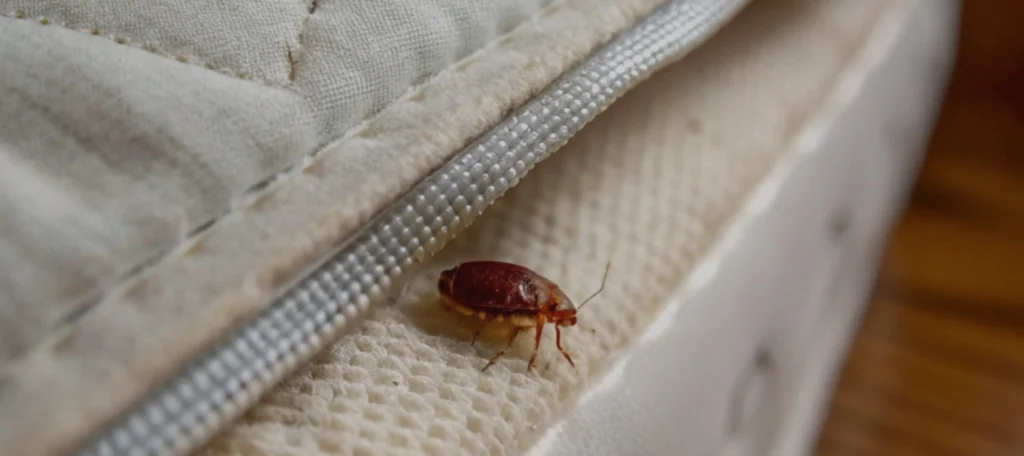
The longer a bed bug problem goes unidentified, the harder and more costly it becomes to resolve. Understanding what bed bug bites actually look like, where these pests hide, and how they entered your home in the first place puts you in a far better position to act quickly before a small pest infestation becomes a whole-home problem.
Bed bug infestations across Melbourne have risen significantly in recent years, driven by increased international travel, the popularity of second-hand furniture markets, and the density of apartment living across inner and middle suburbs. Most homeowners who wake up with unexplained bites spend weeks blaming mosquitoes or a skin reaction, completely unaware that a bed bug population is quietly growing inside their bedroom the entire time
Why Bed Bugs Are So Difficult to Detect in the Early Stages
Bed bugs are uniquely adapted to avoid detection. They feed exclusively at night, typically in the hours just before dawn when sleep is deepest, and retreat into hiding the moment daylight or disturbance occurs. Unlike cockroaches or rodents that leave obvious physical evidence behind, a small bed bug population can go entirely unnoticed for weeks, sometimes months, before bites or physical signs become impossible to ignore.
Their bites are also frequently mistaken for other causes. Reactions to bed bug feeding vary considerably between individuals. Some people develop visible, itchy welts within hours. Others show no skin reaction whatsoever despite being bitten regularly, meaning a bed bug problem in a shared bedroom can affect one person visibly while leaving another completely symptom-free. This inconsistency is one of the main reasons pest infestation involving bed bugs goes undiagnosed for so long in Melbourne households.
What Bed Bug Bites Actually Look and Feel Like
Bed bug bite identification is the first step for any homeowner waking up with marks they cannot explain. Bed bug bites typically appear as small, red, raised welts on the skin that are itchy and sometimes accompanied by a mild burning sensation. They appear on areas of skin left exposed during sleep, most commonly the neck, shoulders, arms, hands and upper back.
The most distinguishing feature of bed bug bites is their pattern. Unlike random insect bites, bed bugs feed multiple times in a single session and move in a line or cluster along the skin as they do so. This produces a characteristic grouping of three or more bites in a line or zigzag arrangement, commonly described as a breakfast, lunch and dinner pattern.
It is important to note that unexplained bites alone cannot definitively confirm a bed bug problem. Bite reactions vary too significantly between individuals to be used as sole evidence. Some people develop large, inflamed welts while others show only a faint red mark. A small number of people show no visible reaction at all. Physical inspection of the sleeping environment is always needed alongside bite evidence to confirm an active bed bug presence.
Bed Bug Bites vs Other Pest Bites – How to Tell the Difference
One of the most common sources of confusion for Melbourne homeowners is distinguishing bed bug bites from mosquito bites and other nighttime pest bites. Each leaves a different pattern and appears on different parts of the body, and these differences are the most useful identification tool available before a professional inspection.
Bed bugs vs mosquitoes: Mosquito bites appear randomly across the body, are singular in nature, and typically cause an immediate reaction that is noticeable within minutes of being bitten. Bed bug bites appear in clusters or lines, often on the upper body and arms, and may not become visible until several hours after feeding has occurred. Waking up with clustered bites that were not present when you went to sleep strongly suggests bed bugs rather than mosquitoes.
Bed bugs vs other biting pests: Other common biting pests Melbourne homeowners encounter include fleas and mites. Flea bites almost always concentrate around the ankles and lower legs, where contact with infested carpet or pet bedding occurs. Mite bites tend to appear in areas where clothing fits tightly against the skin. Bed bug bites, by contrast, appear consistently on upper body areas left uncovered during sleep and follow the clustered or line pattern described above.
The location and pattern of bites across your body is the single most reliable early indicator of night bites identification, before a physical inspection of your bedroom is completed
Where Bed Bugs Hide Inside Your Melbourne Home
Understanding where bed bugs live inside a property makes it significantly easier to find physical evidence of their presence before booking a professional inspection. Bed bugs do not wander randomly through a home. They position themselves as close to their food source as possible and only travel when disturbed, when the population grows beyond the capacity of the current harborage zone, or when carried inadvertently on clothing or belongings.
The most common bed bug hiding spots inside Melbourne homes include:
- Mattress seams and tufts – the primary harborage zone for most infestations, where bugs hide between feeds and deposit eggs along stitching lines
- Bed base joints and slats – timber joints and hollow metal frames in bed bases provide dark, undisturbed harborage directly beneath the sleeping surface.
- Headboard crevices – particularly in upholstered or timber headboards attached to or close to the wall
- Behind bedside tables and picture frames – any item sitting flush against the wall adjacent to the bed becomes a secondary hiding zone as the population grows.
- Electrical outlet plates and skirting boards – bed bugs flatten themselves to fit inside incredibly small gaps, making wall fixtures near the bed a common discovery point.
- Inside wardrobes – along seams of clothing, inside shoes, in the joints of timber furniture and inside luggage stored in or near the bedroom
- Lounge suites and curtain folds – as a bed bug infestation matures and the population expands, bugs migrate into living areas and take up harborage in soft furnishings far from the original bedroom source
The spread from bedroom to living areas is one of the clearest signs that a pest infestation has been present and growing for some time without being addressed.
How Bed Bugs Enter Melbourne Homes in the First Place
How bed bugs spread into a home is one of the first questions Melbourne homeowners ask once an infestation is confirmed, and the answer is almost always one of four common pathways.
Travel and hotels remain the single most frequent source of bed bug introductions into Melbourne homes. Luggage placed on hotel room floors or beds picks up bed bugs and eggs with no visible sign, and those bugs are then transported directly into the bedroom when bags are unpacked at home. Even a single night in an infested room is enough to introduce a breeding population.
Second-hand furniture is a growing source of bed bug problems across Melbourne, particularly mattresses, bed bases, couches, and timber furniture purchased through online marketplaces, garage sales, and second-hand stores. Second-hand furniture bed bugs are a well-documented risk that many buyers do not consider before bringing items into the home.
Visitors and guests can unknowingly introduce bed bugs through infested clothing, bags, or personal items brought into your home. A guest who has recently stayed in an infested property or hotel can transport bed bugs without any awareness that they are doing so.
Neighbouring properties are a significant risk factor in Melbourne apartments and strata buildings. Bed bugs travel through wall cavities, shared pipe penetrations, and under doorways from adjoining units, meaning an infestation in a neighbouring apartment can spread into your home without any of the above entry points being relevant.
What You Should Do If You Suspect Bed Bugs in Your Home
Check Your Mattress and Bed Base Thoroughly
Strip your bedding completely and inspect mattress seams, tufts, and the underside of the mattress for small dark spots, shed skins, tiny white eggs, or live bugs. Check the joints and slats of your bed base and the crevices of your headboard using a torch. These physical signs confirm an active infestation independently of bite evidence and give a licensed pest exterminator critical initial information before the inspection begins.
Do Not Move Bedding or Furniture to Other Rooms
It is an instinct to want to remove suspected items from the bedroom immediately. However, moving infested mattresses, bedding, or furniture through the home spreads bed bugs into every room they pass through. Leave everything in place and contact a professional pest exterminator before moving anything. This single step prevents a contained bedroom problem from becoming a whole-home infestation.
Inspect Recent Purchases and Returned Luggage
If you have recently returned from travel, stayed in a hotel, or brought second-hand furniture into your home, inspect these items carefully in an isolated area away from sleeping spaces. Luggage should be unpacked in a hard-floored area rather than on beds or carpet, and any second-hand items should be inspected thoroughly before being placed inside the home.
Book a Professional Bed Bug Inspection Without Delay
A licensed technician from Apex Pest Control will conduct a thorough inspection of all harborage zones throughout your property, confirm whether bed bugs are present at any life stage, including eggs, and recommend a bed bug pest control treatment plan tailored to the extent of the infestation. Same-day pest control services are available across Melbourne for homeowners with urgent concerns.
Ask About Heat Treatment and Long-Term Protection
Professional heat treatment raises the internal temperature of infested areas to levels that eliminate bed bugs at every life stage, including eggs that chemical treatments cannot always penetrate effectively. Asking your pest exterminator about heat treatment as part of your overall treatment plan ensures the most comprehensive outcome and significantly reduces the likelihood of a recurring infestation.
Conclusion
Unexplained bites combined with any physical signs in your bedroom should never be dismissed or left to resolve on their own. Bed bugs do not disappear without treatment, and every week that passes without professional intervention gives the population more time to spread through your home and make the problem significantly more difficult to resolve. Apex Pest Control provides thorough bed bug extermination services and same-day inspections across Melbourne, confirming whether bed bugs are present and delivering targeted pest treatment that addresses the infestation at every stage. If you are waking up with unexplained bites, act now before the problem grows beyond the bedroom.
Frequently Asked Questions
How do I know if my bites are from bed bugs or something else?
Bed bug bites typically appear in clusters or a line pattern on skin left uncovered during sleep, most commonly on the neck, arms and shoulders. Unlike mosquito bites, which appear randomly and cause an immediate reaction, bed bug bites may not become visible for several hours after feeding. Physical inspection of your mattress seams and bed base for dark spots, shed skins, or eggs is the most reliable way to confirm bed bugs alongside bite evidence.
Can bed bugs live in places other than the bedroom?
Yes. While the bedroom is almost always the primary harborage zone because it offers direct access to a food source, a growing bed bug infestation will spread into lounge suites, curtain folds, carpet edges, and any room where people spend extended periods sitting or resting. In Melbourne apartments, bed bugs also travel through wall cavities into adjoining rooms and neighbouring units as the population expands beyond the original harborage area.
How long can a bed bug infestation go undetected in a Melbourne home?
A bed bug infestation can go undetected for several weeks to several months, depending on the size of the initial introduction and the individual’s sensitivity to bites. Some people show no visible bite reaction at all, meaning an infestation can grow significantly before any obvious sign appears. This is why physical inspection of sleeping areas is important even when bites are not present, but bed bugs are suspected for other reasons.
Can I get bed bugs from a hotel stay in Melbourne?
Yes. Hotel rooms are one of the most common sources of bed bug introduction into Melbourne homes, regardless of the hotel’s star rating or cleanliness standards. Bed bugs travel on luggage placed on floors or beds in infested rooms and are transported home without any visible signs. Inspecting hotel mattress seams on arrival and keeping luggage elevated on luggage racks rather than on the floor significantly reduces the risk of bringing bed bugs home.
How fast do bed bugs spread from one room to another?
Under typical Melbourne indoor conditions, a bed bug population can spread from a single bedroom into adjoining rooms within six to eight weeks of the initial introduction. Spread occurs through active migration along walls and through wall cavities, and by being inadvertently carried on clothing and belongings moved between rooms. The larger the population grows, the faster the spread accelerates as bugs seek new harborage zones beyond the original area.
How does professional bed bug treatment work, and how long does it take?
Professional pest treatment for bed bugs involves a thorough inspection of all harborage zones throughout the property, followed by targeted treatment using heat, chemical application, or a combination of both, depending on the extent of the infestation. Heat treatment raises room temperatures to levels that eliminate bugs and their eggs at all life stages, and it can be completed within a single day for most Melbourne residential properties. A follow-up inspection is typically recommended to confirm full elimination before the property is declared clear.