

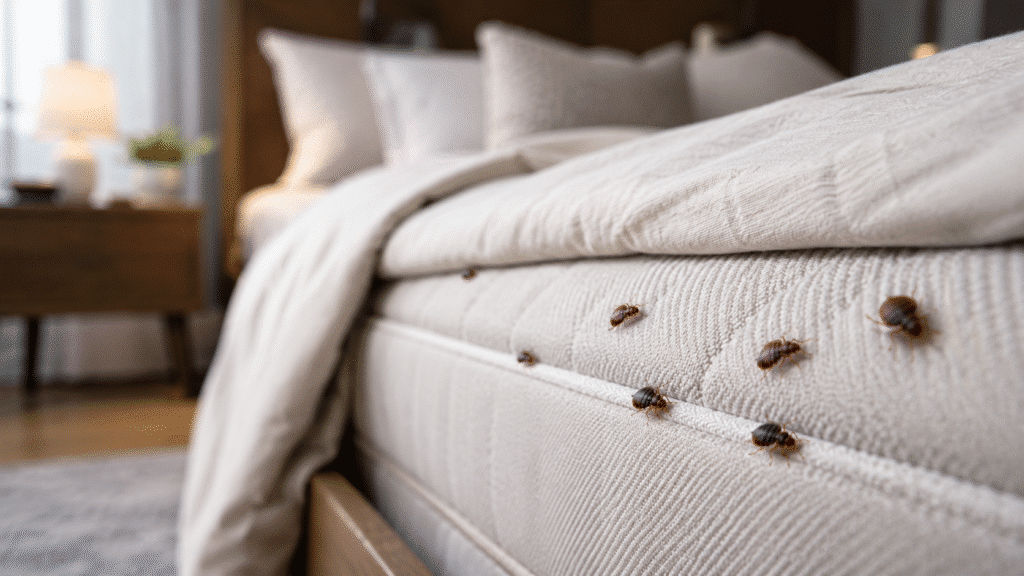
You wake up with a fresh row of itchy welts on your arm, and the person sleeping next to you has nothing. No marks, no itch, and possibly a theory that it is all in your head. It is not. In most cases, both of you are being bitten, and only one of you is showing it.
So will bed bugs only bite one person? Almost never. Bed bugs feed on whoever is within reach, and two people in the same bed are both within reach. What differs is how each body reacts to the bite. That difference is the reason so many Sydney couples spend weeks blaming mosquitoes, new washing powder or an allergy before anyone checks the mattress.
This guide explains why you seem to be the only one getting bitten by bed bugs, what is really happening on the other side of the bed, and what to do so the bites stop for both of you.
Do Bed Bugs Bite Everyone or Only One Person?
Yes, as a rule. Bed bugs find a meal by following body heat and the carbon dioxide you breathe out. Every sleeping person gives off both, so a bed bug has no reason to walk past one person to reach another.
The marks are a different story. A bed bug bite is not a wound in the usual sense. It is your skin reacting to the saliva the bug leaves behind while it feeds, and people react very differently. healthdirect puts the share of people who show no reaction to a bed bug bite as high as one in five. They are fed on like anyone else and simply never see a mark.
That means a couple can share a bed, share the bed bugs and have completely different mornings. One wakes up itching. The other wakes up fine and honestly believes nothing touched them.
Why Am I the Only One Getting Bitten by Bed Bugs?
If you are the one with the bites, there are four likely explanations, and more than one can apply at the same time.
Some People Do Not React to Bed Bug Bites
This is the most common reason by a long way. Your partner may be in the group that shows no reaction, or their reaction may be so mild that it passes as a faint pink dot they never notice.
Bed Bug Bite Reactions Can Be Delayed
For some people the reaction takes its time, and healthdirect says it can be as long as nine days before anything shows. Your partner’s marks may be on the way. When they do appear, they are easy to pin on something else because nothing seemed to happen on the night.
Bed Bugs Are Hiding on Your Side of the Mattress
Bed bugs like to hide close to their meal. If they arrived in your suitcase, your gym bag or the second-hand bedside table on your side, the early population will be tucked into that half of the bed. While numbers are low, the nearest sleeper gets most of the attention. Our article on how bed bugs get into a home covers the usual ways they arrive. As the numbers grow, that gap closes.
Repeated Bed Bug Bites Can Cause Stronger Reactions
Reactions can change with repeated bites. Some people become more sensitive over time, so bites that barely showed in the first week look far angrier a few weeks later. If you have been the main target while the population was small, your skin may simply be further along than your partner’s.
You will also read online that bed bugs prefer a certain blood type, or people who eat sugar, or people who shower at night. There is no good evidence behind any of these. Bed bugs are not fussy, and you cannot fix the problem by changing your diet or swapping sides of the bed.
Bed Bug Bites Symptoms: What Does a Bed Bug Bite Look Like?
Part of the confusion is that bed bug bites symptoms are not the same from one person to the next. If you have searched for what a bed bug bite looks like and found ten different photos, this is why. On the same night, in the same bed, the range can include:
- No visible mark at all
- Small, flat red dots that fade within a day or two
- Raised, itchy welts in a short row or a cluster of three or four
- Larger swollen patches, and occasionally blisters, in people who react strongly
- Purple or darker marks on darker skin, which can be harder to spot
Bites tend to sit on skin that was uncovered during the night, such as the arms, shoulders, neck, face and lower legs. If you sleep in a singlet and shorts and your partner sleeps in long pyjamas, you are offering far more skin, and that alone can make you look like the only target.
Bite marks are still only a clue. Mosquitoes, fleas and some skin conditions can look much the same, which is why a doctor cannot confirm bed bugs from your skin alone. The bed is where the real answer is.
Why One Person Has a Bad Reaction to Bed Bug Bites
A bad reaction to bed bug bites says more about the person than about the bugs. The welts are your immune system responding to the bug’s saliva, and how strongly it responds is individual. One partner can end up with swollen, intensely itchy patches that keep them awake, while the other has a few dots that are gone by lunchtime.
The effects of bed bug bites are mostly limited to the skin. Bed bugs are not known to spread disease to people, so the usual problems are broken sleep and infection where bites have been scratched open. A strong reaction is still worth taking seriously. If the swelling is spreading, the bites are blistering or you feel unwell, see your GP and mention that you suspect bed bugs. For the itch in the meantime, our guide to getting rid of bed bug bites covers what helps.
Signs of Bed Bugs to Check on Both Sides of the Bed
You don’t need bites on both people to prove bed bugs. You need evidence in the bed, and you should check both sides of it.
- Strip the sheets and look at them first. Small rusty smears or blood spots where either of you sleeps are a strong sign.
- Run a torch along the mattress seams and piping on both sides, then the corners of the base.
- Look for clusters of black dots about the size of a full stop, pale papery shed skins and tiny white eggs.
- Check the bedhead, the bed frame joints and both bedside tables, including the back and the drawer runners.
- Lift the edge of the carpet or look along the skirting board behind the bed.
Finding spotting on your partner’s side settles the argument quickly. Even if all the evidence is on your side, the two of you share one bed, and the bugs will not stay on half of it for long.
One of you covered in bites and the other untouched? Call 0468 288 969 or book bed bug treatment in Sydney and we will check the whole bed and the room, not just one side.
Why Bed Bug Treatment Fails When Only One Side of the Bed Is Treated
When one person is suffering, it is tempting to deal with one person’s problem. People wash their own pillow, spray their own side of the mattress, or move to the spare room to get some sleep. Each of these tends to make things worse.
Bed bugs go where the people are. If you move to the couch, some of them will follow within days, and you will have a lounge room to treat as well as a bedroom. If you spray one side of the mattress, the bugs shift to the bed frame, the bedhead or the other side, where your partner still isn’t reacting and nobody is looking.
The partner without marks matters most here. Because they don’t itch, they don’t notice the bugs feeding on them, and the population keeps growing on a meal nobody is tracking. A treatment that ignores their side of the bed, their bedside table and their clothes on the floor leaves a healthy group of bed bugs behind. An experienced pest exterminator treats the bed as one unit for exactly this reason.
How to Stop Bed Bugs From Biting You While You Sleep
These steps will not clear an infestation, but they cut down the bites for both of you while you organise treatment.
- Put all the bedding from both sides, pillowcases and mattress protector included, through a hot wash and then the hottest dryer cycle.
- Go over the seams of the mattress, the base and the floor on both sides with the vacuum, and seal what you collect in a bag for the outdoor bin.
- Pull the bed away from the wall and keep doonas and sheets from touching the floor.
- Clear clothes, bags and shoes from the floor on both sides.
- Neither of you changes beds before the treatment has been done.
Hold off on shop sprays and bug bombs. They rarely reach where bed bugs hide and often scatter them into other rooms, which makes them harder to find later.
People also ask what repels bed bugs from biting, or what they can put on their skin to keep bed bugs off at night. No skin product is a dependable bed bug repellent, and none of them touches the bugs living in the bed. The only lasting way to prevent bed bug bites while sleeping is to get rid of the bed bugs themselves.
What to Do When Bed Bugs Only Bite One Person
1. Treat Bed Bug Bites as a Whole-Bed Problem
Assume both of you are being fed on, even if only one of you has marks. That one change in thinking keeps you from half-treating the bed.
2. Check the Mattress and Bed Frame for Bed Bugs
Use a torch on the mattress seams, the base, the bedhead and both bedside tables. Take photos of any spotting, shed skins or bugs you find. If a live bug turns up, our guide on what to do when you find one bed bug explains how to identify it and what to check next.
3. Wash Bedding on High Heat to Kill Bed Bugs
Bedding, pyjamas and anything that has been sitting on the bedroom floor all go through a hot wash and a hot dryer.
4. Keep Sleeping in the Same Bed So Bed Bugs Do Not Spread
It feels wrong, but moving out of the bedroom carries bed bugs to the next place you sleep. Keeping them in one room keeps the job small.
5. Look After Your Bed Bug Bites
Keep them clean, cool them down when the itch flares and leave them alone as much as you can. A bite that turns hot or weepy, or a rash that keeps growing, is one for your GP or pharmacist.
6. Book a Bed Bug Inspection for the Whole Room
A licensed technician will check the entire bed, the furniture around it and the room, confirm what is biting you and treat every hiding spot in one plan.
Conclusion
When only one person in the bed gets bed bug bites, the bugs are rarely choosing a favourite. Far more often, both people are being bitten and only one body is reacting. That is why the person with clear skin should not be left out of the plan, and why treating one pillow or one side of the mattress never works. Check both sides of the bed for spotting and shed skins, wash and dry all the bedding on high heat, stay put so the bugs don’t spread, and have the whole room inspected.
Get the whole bed checked, not just your side. Call 0468 288 969 and a licensed, insured technician can inspect the same day. Treatments carry a 6-month warranty.
Frequently Asked Questions
1. Will bed bugs only bite one person in a bed?
It is very unlikely. Bed bugs feed on any sleeping person they can reach. When only one person has marks, the usual reason is that the other person does not react to the bites or reacts much later.
2. Can my partner have bed bugs and not know it?
Yes. healthdirect reports that up to a fifth of people show nothing on their skin after a bed bug bite. They can be bitten every night and never see a mark or feel an itch.
3. Do bed bugs prefer a certain blood type?
There is no good evidence that they do. Bed bugs are drawn to body heat and the carbon dioxide people breathe out, and everyone gives off both.
4. Should the person without bed bug bites sleep in another room?
No. Bed bugs follow people, so anyone who moves can carry them to a second bed or the couch. The safer choice is for you both to sleep where you normally do and get the bedroom treated.
5. Will bed bug treatment cover one room or the whole unit?
The inspection decides that. Where the bugs are confined to the bed you share, the bedroom is usually all that needs doing. If either of you has spent nights on the lounge or in the spare room, we check those too, because that is how bed bugs spread through a home.
6. What affects the size of a bed bug treatment?
Mainly the number of beds in use, how many weeks the bites have been appearing, whether anyone has slept elsewhere in the home, and how much furniture sits close to the bed. Shared walls in an apartment block can add to it. All of this is confirmed at the inspection, before treatment begins.
7. How long do bed bug bites last?
For the person who reacts, most marks fade within a week or two if they are left alone, and scratching keeps them going for longer. Marks that keep appearing after that are new bites, which means the bed bugs are still feeding.
8. What repels bed bugs from biting you?
Nothing you put on your skin can be relied on to stop bed bugs biting. Insect repellents made for mosquitoes are not a dependable answer, and they leave the bugs in the bed untouched. Treating the bed and the room is what stops the bites.