

Small, itchy bites that weren’t there when you went to bed, a few more each morning, and no sign of what is causing them. If that sounds familiar, you can settle the itch tonight, but the bites will only stop once the bed bugs feeding on you are gone.
When people search for how to get rid of bed bug bites, they usually want two things: relief now and no new bites tomorrow. Bed bug bites can’t be wiped away overnight. Most settle on their own within one to two weeks, and the real job is stopping the next round. This guide covers both: simple ways to calm the bites you already have, and what to do in your bedroom tonight so you wake up with fewer new ones.
Across Sydney, most of the bed bug enquiries Apex Pest Control receives start the same way. Someone has been bitten for a few nights, the bites are getting worse, and they are not even sure it is bed bugs. That uncertainty is normal, and working through it calmly is the first step.
Can You Get Rid of Bed Bug Bites Overnight?
Not completely. A bed bug bite is a reaction to the saliva the bug injects while it feeds, and your skin needs time to settle. What you can do overnight is take the heat and itch out of the bites, protect them from infection, and make your bed a much harder place for bed bugs to feed.
It is also worth knowing that reactions vary a lot. According to healthdirect, as many as 1 in 5 people don’t react to bed bug bites at all, and some people don’t notice a reaction for up to nine days. That is why one person in a bed can wake up covered in welts while the person next to them has nothing, and why new bites can keep appearing even on nights you didn’t feel anything.
How to Calm Bed Bug Bites Tonight
These steps will not make the bites disappear, but they ease the itch and lower the chance of an infection while your skin recovers:
- Wash the bites gently with soap and cool water, then pat them dry.
- Hold a cold compress or an ice pack wrapped in a cloth against itchy patches for ten minutes at a time.
- Try not to scratch. Keep your nails short, and wear light cotton to bed so nothing rubs.
- Ask your local pharmacist what they recommend for itchy insect bites, especially for children or if you are pregnant.
Scratching is the part that turns a nuisance into a problem. Broken skin lets bacteria in, and an infected bite takes much longer to heal than the bite itself.
When to See a Pharmacist or GP About Bed Bug Bites
Most bed bug bites are uncomfortable rather than dangerous, but some reactions need a professional opinion. See a pharmacist or your GP if:
- The bites are so itchy you can’t sleep, or they are not settling after a week or two
- A bite becomes hot, swollen, weepy or more painful, which can point to an infection
- You have large blistered areas or a rash spreading well beyond the bites
- The person bitten is a baby or young child
Call 000 straight away if anyone has swelling of the face, lips or tongue, or trouble breathing. Severe allergic reactions to bed bugs are rare, but they do happen.
How to Tell if the Bites Are Really From Bed Bugs
Bites alone can’t confirm bed bugs, because mosquitoes, fleas and even some skin conditions can look similar. A few patterns make bed bugs more likely:
- The bites are on skin left uncovered while you sleep, such as arms, shoulders, neck and legs
- They appear in small rows or clusters of three or four
- New bites turn up in the morning rather than during the day
- On darker skin, the bites can look purple and be harder to see
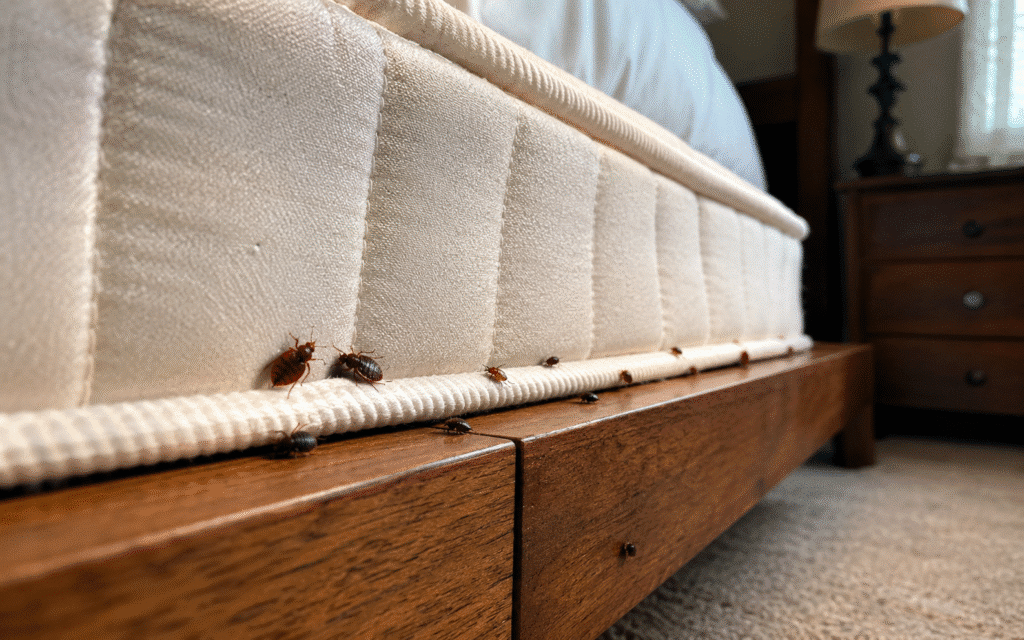
The surest sign is physical evidence in the bed. Pull back the sheets and check the mattress seams, the piping along the edges and the corners of the base with a torch. You are looking for small rusty or blood spots, clusters of black dots the size of a full stop, pale shed skins and live bugs, which are flat, oval and roughly the size of an apple seed when fully grown. Check the bed frame joints and the back of the bedhead too, because bed bugs like tight gaps close to where you sleep.
How to Stop Bed Bugs From Biting You Tonight
You can’t clear an infestation in one night, but you can make the bed harder to reach and cut down how many bugs are waiting for you.
- Strip the bed and put the sheets, pillowcases and any clothes from the floor straight into a sealed bag, then wash them in hot water and tumble dry on high.
- Vacuum the mattress seams, the base and the carpet around the bed, then empty the vacuum into a sealed bag and put it in the outside bin.
- Pull the bed a little away from the wall and the bedside tables.
- Tuck the sheets and blankets in so nothing hangs down to the floor, because bed bugs climb up whatever touches it.
- Keep clutter, bags and clothes off the floor around the bed.
One thing that does not help is moving to the couch or a spare room. Bed bugs follow the person, not the bed, and sleeping somewhere else can carry them into a second room and turn a one-room job into a whole-home one. If you can, keep sleeping in the same bed until the room is treated.
You may also see personal insect repellents or “bed bug repellent for skin” products suggested online. They are not a dependable way to stop bed bugs feeding, and they do nothing about the bugs living in the bed.
Bites getting worse each night? Call 0468 288 969 or book bed bug treatment Sydney homes rely on, and we will find where they are hiding and stop the bites at the source.
Why New Bed Bug Bites Keep Appearing
Bed bugs spend the day tucked into seams, joints and cracks, usually within a couple of metres of the bed, and come out at night to feed. A single feed takes only a few minutes, and most people sleep straight through it. Once they have fed, they go back into hiding, which is why you can search a room in daylight and see nothing.
A female lays eggs every day once she has fed, so a problem that began with a handful of bugs grows steadily over a few weeks. That is what people mean when they say the bites are “getting worse the last few days”. The number of bugs is rising, not the strength of the bites.
Bed bugs can also go months without feeding, so leaving the room empty for a week or staying elsewhere for a few nights will not starve them out. They will simply be waiting when you come back.
Where Home Remedies Stop Working
Washing, vacuuming and keeping the bed clear of the floor are worth doing, and they reduce bites while you arrange help. What they can’t do is reach the eggs and bugs inside the bed frame, the skirting boards, power points and furniture joints.
Shop sprays and bug bombs tend to make things harder, not easier. They rarely reach where the bugs actually sit, and they can push them deeper into walls or into the next room. healthdirect also advises against treating your own bedding with surface pesticides.
It is time to bring in a professional if:
- You are still getting new bites after a week of the steps above
- You have found live bugs, shed skins or spotting on the mattress
- More than one person or more than one room is affected
- You live in a unit or apartment, where bed bugs can move between neighbouring homes
What a Professional Bed Bug Treatment Involves
A proper treatment starts with an inspection, not a spray. A licensed technician checks the mattress, base, bedhead, skirting, power points and nearby furniture to confirm bed bugs are present and to see how far they have spread. That inspection is what decides whether the job is one bed, one room or the whole home.
Treatment then goes into the places bed bugs actually hide, using products registered for bed bug control and applied at label rates. Because eggs are harder to kill than adult bugs, a follow-up visit is normally booked to catch anything that hatches after the first treatment. You will get clear preparation steps beforehand, such as which linen and clothes to wash and what to move away from the walls, so the treatment can reach every hiding spot.
If you are still working out how the bugs got into your home in the first place, our guide on how bed bugs get into your home covers the usual sources and how to stop them coming back. For other pests around the house, see our residential pest control services.
What You Should Do About Bed Bug Bites
1. Calm the bites you already have
Wash the bites with soap and cool water, use a cold compress for the itch and try hard not to scratch. Ask your pharmacist about anything stronger, and see your GP if a bite looks infected or the reaction keeps spreading.
2. Check the bed for evidence
Use a torch to look along the mattress seams, the base, the bed frame joints and the back of the bedhead. Spots of blood, black dots, shed skins or a live bug tell you the bites are coming from the bed rather than from somewhere else.
3. Make the bed harder to reach tonight
Hot wash and tumble dry the bedding, vacuum around the bed and pull it away from the wall so nothing touches the floor. These steps won’t end the problem, but they cut down how many bugs can reach you each night.
4. Stay put and skip the shop sprays
Keep sleeping in the same bed so the bugs don’t spread to other rooms, and hold off on sprays and bombs. Scattering the bugs makes them harder to find and can turn a small job into a much bigger one.
5. Book a bed bug inspection
Book an inspection while the problem is still small. A technician will confirm what is biting you, find where the bugs are hiding and treat the source, so the bites stop for good rather than for a night.
Conclusion
Waking up covered in bites is miserable, and it is natural to look for a quick fix. The honest answer is that the bites themselves need a week or two to settle, while the itch can be eased tonight with cool water, a cold compress and a chat with your pharmacist. What actually stops new bites is dealing with the bed bugs, and the sooner that happens, the smaller the job. Strip and hot wash the bedding, keep the bed clear of the floor, stay in the same room and leave the shop sprays on the shelf. Then have the room inspected so the bugs are found and treated where they live.
Stop the bites at the source. Call 0468 288 969 for a same-day bed bug inspection from licensed and insured technicians, backed by a 6-month warranty.
Frequently Asked Questions
1. How long do bed bug bites last?
Most bed bug bites settle on their own within one to two weeks. Scratching can make them last longer and raises the risk of infection, so keep them clean and see a pharmacist or GP if they are not improving.
2. Why do I keep getting new bed bug bites every night?
Bed bugs hide close to the bed during the day and feed at night, and their numbers grow as females keep laying eggs. New bites usually mean the bugs are still in the bed or furniture nearby, so the bites will continue until the bugs are treated.
3. Should I sleep on the couch until the bed bugs are gone?
It is better to stay in the same bed. Bed bugs follow people to wherever they sleep, so moving rooms can spread them into the couch or a second bedroom and make treatment larger.
4. Do skin repellents stop bed bugs from biting?
They are not a reliable way to prevent bed bug bites, and they do nothing about the bugs hiding in the bed. Removing the bugs is the only lasting way to stop the bites.
5. Will you treat one room or the whole unit?
That depends on what the inspection finds. If the activity is limited to one bed or one bedroom, treatment can focus there. If bugs have spread to other rooms, couches or neighbouring areas, those spaces need treating too, or the problem will come back.
6. What affects the size of the job?
The number of rooms and beds affected, how long the bugs have been there, how much furniture is involved, whether the home is a unit with shared walls, and whether anything was sprayed beforehand. The inspection confirms all of this before any treatment starts.