

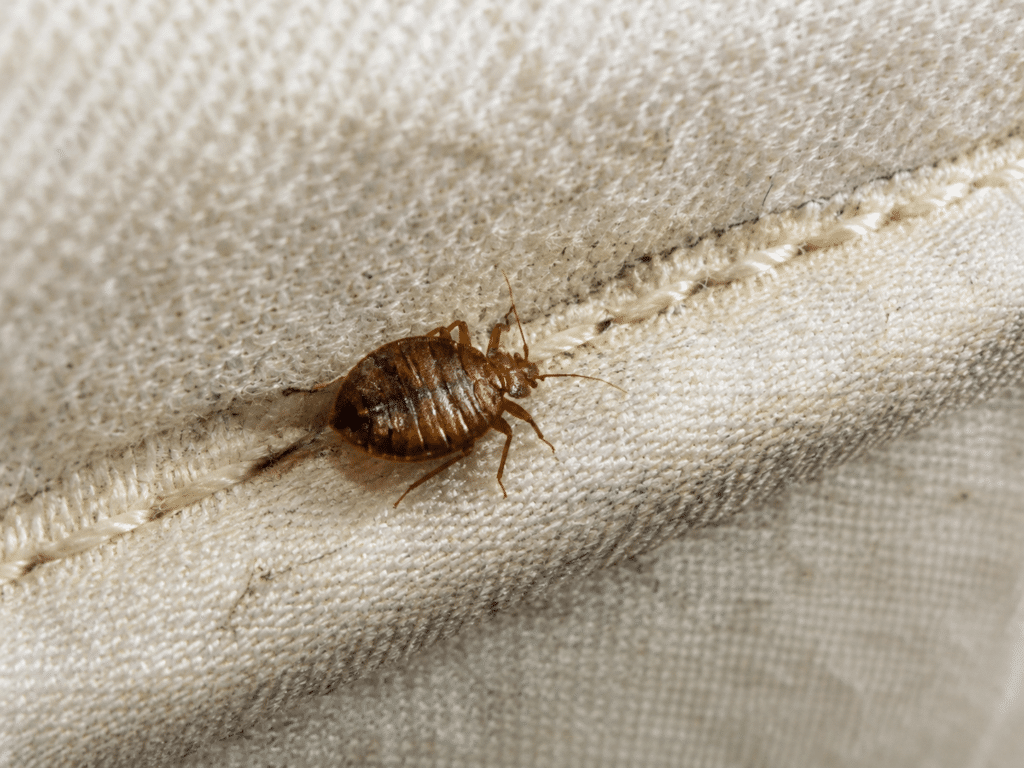
A bed bug crawling across the cushion, itchy bites after a night on the lounge, a couple of dark spots along a seam: finding bed bugs in a couch makes most people want it out of the house straight away. Before you call for a hand to lift it, know this. Most couches with bed bugs can be treated and kept, and the kerb is usually the last step rather than the first.
Whether your sofa can be saved comes down to how heavily it is infested, what condition it is in and whether the room around it gets treated too. This guide helps you make that decision, shows you where bed bugs hide in a couch, and explains how to get rid of bed bugs on a couch without spreading them through your Sydney home or unit.
Bed Bugs in a Couch: Treat It or Throw It Out?
Use this as a starting point, then let an inspection confirm the answer.
Treating the couch usually makes sense when:
- the bed bug activity is light to moderate
- the upholstery, seams and frame are in good condition
- the couch is expensive, near new or hard to replace
Replacing the couch may make sense when:
- it is heavily infested with bed bugs
- rips, split seams or a broken frame give bed bugs places treatment cannot reach
- it was already worn out and due for replacement
Purdue University’s bed bug guidance supports this approach. It says bed bugs can be eliminated from stuffed furniture and that, in most cases, expensive furniture does not need to be thrown out, while a heavily infested piece may be better discarded.
Why Bed Bugs End Up in Couches and Sofas
Bed bugs need blood meals, so they shelter close to wherever people stay still for long periods. That is often the bed, but anyone who regularly naps, sleeps or watches TV for hours on a lounge gives them the same opportunity. A couch can also bring bed bugs home in the first place, particularly a second-hand sofa or one collected from the kerb.
Bed bugs can go for many months without a blood meal, so a couch that has sat unused in a spare room or storage can still be carrying them.
Where Bed Bugs Hide in a Couch
Bed bugs prefer tight, dark gaps, and a couch has plenty. Check these areas with a bright torch and an old card:
- Cushion seams and zips: along the piping, under tags and inside the zip line of removable covers.
- Gaps in the seat: where the seat meets the back and arms, and anywhere crumbs collect.
- Underside of the base: the fabric stapled underneath, plus the corners and staple lines.
- Rear panels: the back of a fabric sofa, which is easy to miss when it sits against a wall.
- Moving parts: recliner mechanisms and fold-out sofa bed frames.
A couch is only one of several places to look, and knowing where bed bugs hide besides the bed makes it easier to judge how far the problem has gone.
Signs of a Couch Infested With Bed Bugs
You may never catch a live bug in daylight, so look for what they leave behind on the couch or sofa:
- clusters of tiny black or dark brown droppings along the seams
- small rusty smears on cushions, throws or armrests
- pale, empty skins shed by growing bed bugs
- white eggs about 1 mm long, tucked into folds
- new itchy bites after time on the couch, although bites alone do not confirm bed bugs
One of these signs may have another explanation. Several together, especially in the seams, make bed bugs far more likely.
Think your couch has bed bugs? Call 0468 288 969 or book bed bug treatment in Sydney online, and have the couch and bedroom treated in one visit.
Fabric, Leather and Sofa Beds: Does the Type of Couch Matter?
The material changes where bed bugs shelter, but it does not make a couch safe from them.
- Fabric couches: offer the most seams, folds and texture, so they take the longest to inspect.
- Leather couches: have fewer folds, but bed bugs can still use the stitching, the frame and the fabric under the base.
- Recliners and sofa beds: their mechanisms create many small gaps, and a sofa bed that people sleep on carries the same risk as a bed.
Tell your technician what your couch is made of, because heat and residual products both need to suit the material.
How Professionals Treat Bed Bugs on a Couch
Effective residential pest control for bed bugs covers every upholstered piece in the affected area, not only the bed. After inspecting the couch and the room, the technician chooses from:
- Heat treatment: kills every life stage when the right temperature reaches the seams and folds, and suits people who prefer to avoid chemicals.
- Targeted residual treatment: registered products are applied where bed bugs shelter, following the label directions.
- A combination of both: often used for larger infestations.
Heat treatment usually clears an infestation in one visit, with a follow-up inspection two to four weeks later. Chemical treatment generally takes two to three weeks as remaining eggs hatch, with one or two follow-up visits.
Can You Get Rid of Bed Bugs on a Couch Yourself?
Home methods can reduce the numbers, but they rarely finish the job, because bed bugs and eggs deep inside a couch are hard to reach.
- Vacuuming a couch: picks up some bugs from seams and gaps. Empty the vacuum into a sealed bag and take it to an outside bin straight away.
- Steaming a couch: kills only what the heat reaches, and some upholstery can be damaged, so check the care instructions first.
- Washing covers and throws: where the label allows, wash in water above 60°C, then tumble dry on a hot setting for at least 30 minutes.
- Bed bug sprays and foggers: over-the-counter foggers will not eliminate bed bugs. Hold off until the problem has been identified, and tell your technician about anything you have already used.
Why Dumping the Couch First Can Make Bed Bugs Worse
Carrying an unwrapped couch through the house can shake bed bugs onto floors, hallways, stairs and lifts. Any bugs already in the bedroom, skirting boards or nearby furniture stay behind too, ready to move onto whatever replaces it.
The same logic applies when deciding whether to throw out the mattress after bed bugs. Treat first and buy new furniture afterwards, so the new couch comes home to a room that has already been dealt with.
How to Dispose of a Couch With Bed Bugs Safely
If the couch does have to go, keep the bed bugs sealed inside it:
- Wrap it: cover it in plastic drop sheets and tape, sealing every opening and tear.
- Plan the route: treat it as a two-person lift, and work out how it fits through doors and stairways before you start.
- Mark it: label it as infested with bed bugs, and slash the fabric so that nobody takes it home.
- Book collection: check your council’s bulky waste service, and keep the couch off the kerb until your booking.
- Clean up: vacuum along the route and where it stood.
Can Bed Bugs Spread From a Couch to the Bed?
Yes. Bed bugs can spread from a couch to the bed on blankets, cushions, bags and clothes, and they can crawl along floors and through gaps in walls. In Sydney units and terraces, shared walls add another route. Finding out whether bed bugs in one room have reached the rest of the home is what sets the real size of the job.
Sleeping on the couch to escape bites in the bedroom can also carry the problem from one room to the other, so stay in your usual bed until the home has been checked.
What You Should Do If You Find Bed Bugs on Your Couch
1. Leave the Couch Where It Is
Do not carry it outside or into another room yet, as this can spread bed bugs through your home or building.
2. Photograph the Evidence
Take clear photos of any bugs, spots, skins or eggs, and note where you found them, so that you can describe them when you book.
3. Check the Bedroom as Well
Look along mattress seams, the bed frame and bedside furniture, even if the bites only seem to happen on the couch.
4. Wash What Can Be Washed
Hot wash and hot dry throws, blankets and any removable covers that can take it, and bag them before carrying them through the house.
5. Book a Bed Bug Inspection
A licensed technician can confirm whether you have bed bugs, show you how far they have spread and tell you whether your couch can be saved.
Conclusion
Finding bed bugs in a couch does not automatically mean losing the couch. If it is in good condition and the infestation is not severe, it can usually be treated along with the rest of the room. If it is heavily infested or badly damaged, wrap it, mark it and replace it after the room has been treated.
An experienced pest exterminator can check the couch, the bedroom and the gaps around them, then tell you what is worth saving before you spend money on new furniture.
Call 0468 288 969 to book a bed bug inspection in Sydney with our licensed and insured team, before anything goes out to the kerb.
Frequently Asked Questions
1. Do I Need to Throw Out My Couch if It Has Bed Bugs?
Usually not. Most couches can be treated and kept. Replacing one is mainly worth considering when it is heavily infested, badly damaged or already due for replacement.
2. How Do I Know if My Couch Has Bed Bugs?
Check the seams, zips, cushion gaps, frame and underside for live bugs, clusters of black dots, rusty smears, shed skins and white eggs. A licensed technician can confirm what you have found.
3. I Found One Bed Bug on My Couch. What Should I Do?
Leave the couch where it is, photograph the bug if you can, and check the seams, cushions and frame with a torch. Check the bedroom as well and book an inspection, because one bed bug can mean more are hiding nearby.
4. Can You Get Bed Bugs From Sitting on a Couch?
It is possible. Bed bugs can bite people who sit or nap on an infested couch, and they can crawl onto bags and clothing. Take extra care with used sofas, and check them closely before bringing them inside.
5. Can Bed Bugs Live in a Leather Couch?
Yes. Leather has fewer folds than fabric, but bed bugs can still hide in the stitching, the frame and the fabric under the base, so a leather couch still needs checking and treating.
6. How Long Can Bed Bugs Live in a Couch Without Feeding?
Bed bugs can survive for many months without a blood meal, so leaving a couch unused for a few weeks will not get rid of them.
7. Does Steam Kill Bed Bugs on a Couch?
Heat kills bed bugs, but steam only works where it reaches them. Bugs and eggs deeper in the frame or stuffing can survive, so steaming alone is rarely enough.
8. Will You Treat One Room or the Whole Unit?
That depends on what the inspection finds. We check the couch, bedrooms and nearby rooms, then recommend treating the areas where bed bugs are found or likely to have spread.
9. What Affects the Size of the Job?
The size of the job depends on how many rooms, beds and couches are affected, how far the bed bugs have spread and how much furniture needs treating. An inspection confirms the scope before treatment starts.