

You have a cluster of small, itchy red bites on your legs, and you want to know what caused them. Bed bugs and fleas are the two most common answers in Sydney homes, and their bites can look surprisingly alike. Getting it right matters, because bed bugs and fleas need completely different treatments, and treating the wrong one wastes weeks while the real problem grows.
The quickest way to tell bed bug bites from flea bites is to look at where the bites are, when they appear and what is living in your home. Fleas usually bite the ankles and lower legs, often in homes with pets. Bed bugs usually bite skin left uncovered in bed, such as arms, shoulders and legs, and the bites tend to appear overnight.
This guide walks through the differences, how to confirm which pest you have, and what to do next.
Bed Bug Bites vs Flea Bites: The Quick Comparison
Bed bug bites and flea bites can look alike, but these patterns point strongly one way or the other.
- Where the bites are: flea bites are mostly on the feet, ankles and lower legs. Bed bug bites appear on any skin exposed while you sleep, including arms, shoulders, neck, face and legs.
- When they appear: bed bug bites usually show up in the morning. Flea bites can appear at any time of day, often after time on carpet, rugs or the lounge.
- How they are grouped: both can appear in clusters. Bed bug bites often form a short line or a tight group of three or four. Flea bites tend to be scattered in small groups around the ankles.
- Who is affected: fleas are far more common in homes with cats or dogs. Bed bugs have nothing to do with pets.
What Do Flea Bites Look Like?
Flea bites are small, red, raised spots, often with a red halo around them. They are usually very itchy and turn up in groups on the ankles and lower legs, because fleas jump onto you from the floor, rugs or pet bedding. Children sitting or playing on carpet can get them higher up on the legs and body.
Fleas usually come into a home on cats and dogs. A home can also have fleas after a pet has left, for example when you move into a rental where the previous tenants had a pet. Flea pupae can lie dormant in carpet and become active when people move back in and walk across the floor.
What Do Bed Bug Bites Look Like?
Bed bug bites are red, itchy welts that range from flat spots to raised bumps. They appear on skin that was uncovered during the night, and they often sit in a short row or a cluster where the bug fed several times. On darker skin the marks may be purplish and less obvious.
Reactions to bed bug bites vary a lot from person to person. healthdirect notes that up to a fifth of people show no reaction, so two people can share a bed and only one ends up with welts. Our article on why only one person gets bed bug bites explains how that works.
Bed Bug Bites on Legs vs Flea Bites on Ankles
Bed bug bites on the legs are common, because legs are often outside the covers during the night. Flea bites on the legs are even more common, because fleas live at floor level and jump onto the nearest skin.
So the legs alone will not settle it. Look at the rest of your body. If the bites are only on your feet, ankles and calves, fleas are the more likely cause. If you also have bites on your arms, shoulders or neck, and they appear after a night in bed, bed bugs move to the top of the list. Spotted an insect as well? Our guide on what to do when you find one bed bug shows what they look like at every stage.
How to Tell if You Have Fleas or Bed Bugs at Home
The surest way to separate bed bugs vs fleas is to find the insect or the signs it leaves behind.
Signs of Fleas in the House
- Your pet is scratching, biting at its fur or has red patches on its skin
- Tiny dark insects that jump when disturbed, often seen on socks, pet bedding or carpet
- Black specks in pet bedding that turn reddish when placed on damp white paper, which is flea dirt
- Bites that appear after time on carpet or the lounge, rather than after sleeping
Signs of Bed Bugs in the Bed
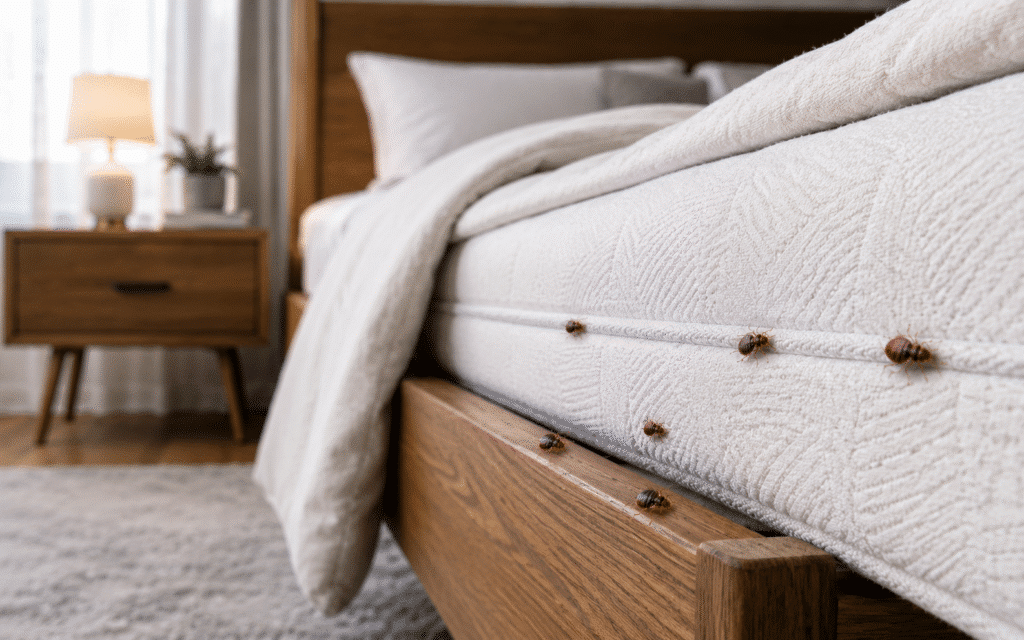
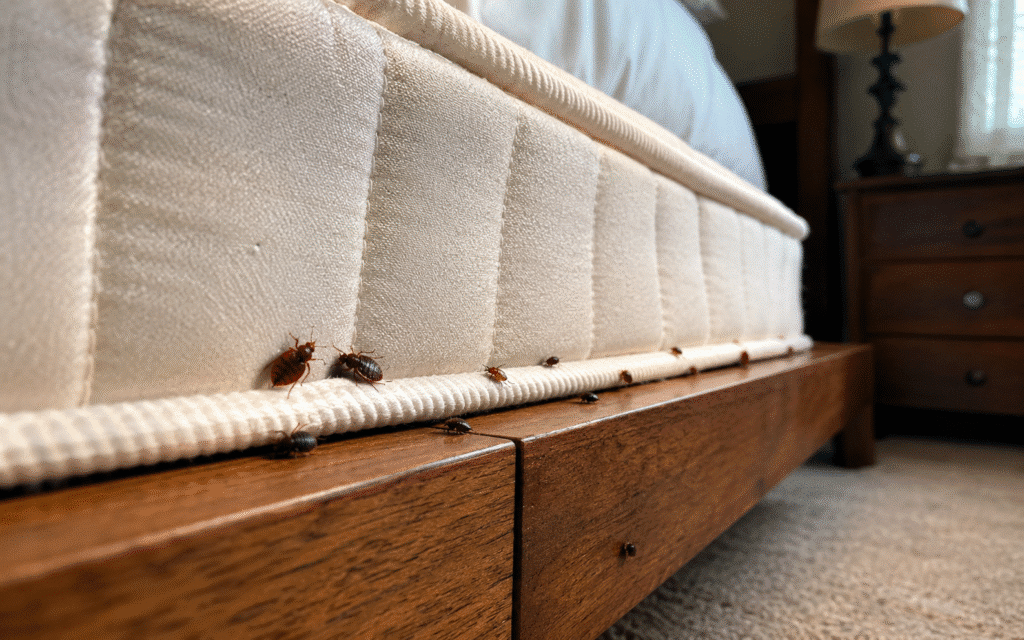
- Black spots like dots from a felt-tip pen along mattress seams and the bed frame
- Rusty or blood spots on sheets and pillowcases
- Pale shed skins and flat, oval, reddish-brown bugs that crawl rather than jump
- New bites in the morning, even in a home with no pets
Still not sure what is biting you? Call 0468 288 969 to arrange bed bug treatment in Sydney and we will identify it on the first visit and treat whichever one it is.
How to Treat Bed Bug Bites and Flea Bites
Treating bed bug bites and flea bites at home is much the same. Clean them with mild soap and cool water, hold something cold against them when they itch, and keep fingernails off them so the skin does not break and get infected. Your local pharmacist can suggest something for itchy bites, which is worth doing for children in particular.
Get advice from a pharmacist or doctor if the bites are still bad after a week or two, or if one turns hot, puffy, weeping or more painful. Swelling of the face, lips or tongue, or any difficulty breathing, is an emergency, so call 000 immediately. For more on settling bed bug bites specifically, see our guide to getting rid of bed bug bites.
Flea Treatment vs Bed Bug Treatment: Why They Differ
Flea treatment and bed bug treatment work in completely different ways, which is why guessing wrong costs time. Flea control is about treating the pets and the floor. Pets need flea treatment, usually on the advice of your vet, and carpets, rugs, pet bedding and the yard are treated with a product that stops flea eggs and larvae from developing. Regular vacuuming helps remove eggs and larvae.
Bed bug removal is a different job altogether. Bed bugs live in the bed, the bed frame, nearby furniture, skirting boards and power points, and they need a targeted treatment of those areas, followed by a second visit to catch the bugs that hatch afterwards.
Treating for fleas when you have bed bugs leaves the bed bugs untouched, and the reverse is just as true. If you are moving out of a rental with a pet, our end of lease flea treatment page explains what a pet condition in a NSW lease can require.
What You Should Do if You Have Itchy Bites on Your Legs
1. Track Where the Bed Bug or Flea Bites Appear
Write down which parts of your body are bitten and whether new bites appear after sleeping or after time on the floor or the lounge.
2. Check Your Pets for Fleas
Look for scratching, red skin and flea dirt in their bedding. If you find signs, speak to your vet about treating them.
3. Check the Bed for Signs of Bed Bugs
Shine a torch over the seams of the mattress, the joints of the frame and the bedhead for droppings, rust-coloured marks, cast skins and live bugs.
4. Care for Bed Bug and Flea Bites
Keep them clean and cool and leave them alone. If they are getting worse rather than better, see your pharmacist or doctor.
5. Book an Inspection to Confirm Fleas or Bed Bugs
If you cannot tell which pest you have, or the bites keep coming, book an inspection so the right treatment is used the first time.
Conclusion
Clustered, itchy bites on your legs can come from fleas or bed bugs, and the bites alone rarely settle the question. Bites mainly on the ankles and lower legs in a home with pets point to fleas. Bites on arms, shoulders and legs that appear overnight point to bed bugs. Check your pets, check the bed and look for the signs each pest leaves behind. Then treat the pest you actually have, because a flea treatment will not stop bed bugs, and a bed bug treatment will not stop fleas.
Want a definite answer? Call 0468 288 969 and a licensed, insured technician can visit the same day to identify the pest and treat it, with a written warranty.
Frequently Asked Questions
1. How can I tell bed bug bites from flea bites?
Look at where and when they appear. Flea bites are mostly on the feet, ankles and lower legs and can appear at any time. Bed bug bites appear on any skin exposed in bed, often in a line or cluster, and usually show up in the morning.
2. Can you get fleas without having pets?
Yes. Fleas can be left behind by a previous tenant’s pet or brought in by visiting animals or wildlife. Flea pupae can stay dormant in carpet and become active when people return to the home.
3. Do bed bugs bite your legs?
They can. Bed bugs bite any skin left uncovered while you sleep, and legs are often outside the covers. Bites on your arms, neck or shoulders as well make bed bugs more likely than fleas.
4. Do flea bites spread like bed bug bites?
Both pests keep biting until they are dealt with. Fleas spread through the home on pets and in carpets, while bed bugs spread through beds, furniture and belongings.
5. What happens during the inspection?
The technician identifies the pest first, then checks the beds, furniture, floors and pet areas to see how far it has spread. You are told what needs treating and why before any work starts.
6. What affects the treatment we recommend?
Whether it is fleas or bed bugs, how many rooms are affected, whether there are pets in the home, the type of flooring, and how long the problem has been going on. These decide which treatment suits your home.
7. Do fleas live in beds like bed bugs?
Not usually. Fleas live mainly on pets and in carpet, rugs and pet bedding. They can end up in your bed if a cat or dog sleeps there, but they do not hide in mattress seams and bed frames the way bed bugs do.
8. What do flea bites look like on humans?
Small, red, very itchy spots, often with a red ring around them, usually in groups on the feet, ankles and lower legs. Bites higher on the body are more common in children who sit or play on carpet.