

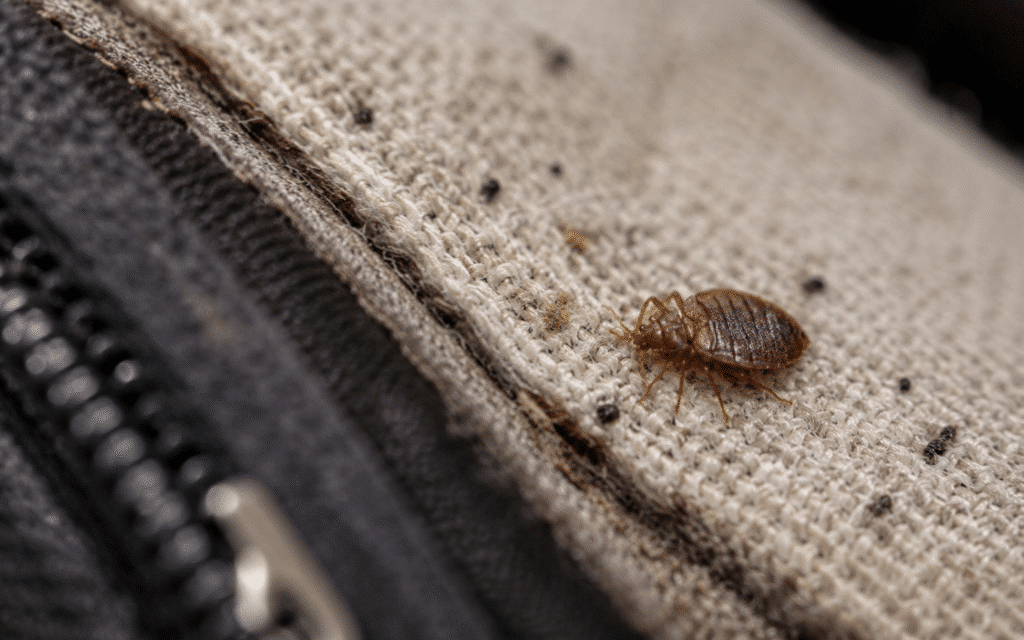
One bed bug is enough to ruin a night’s sleep. You have seen it on the sheet or the arm of the couch, and now every itch feels suspicious and every speck on the mattress looks like it is moving.
Here is the short answer. If you have found one bed bug, don’t panic and don’t ignore it. Snap a quick photo, get rid of the bug, then check the mattress, the bed frame and the furniture next to it for signs that it has company. That takes less than an hour, and what you find tells you whether this is a one-off or the start of a bed bug infestation.
The rest of this guide takes you through each step in the order you should do it.
Does Finding One Bed Bug Mean You Have an Infestation?
Sometimes it is only one. A single bed bug can ride home in a suitcase, a backpack or a second-hand chair and be caught before it settles in. If you have just come back from a trip and the bug was on your luggage, that is a real possibility.
More often, the one you saw is the one that got unlucky. Bed bugs hide during the day and feed for only a few minutes at night, so most people live with them for weeks before they catch one in the open. A single female that has already mated can also begin laying eggs after she feeds, which means even a lone bug can become a problem if nothing is done.
You cannot tell which situation you are in by looking at one insect. The evidence in the bed decides it. If you are wondering how it arrived in the first place, our guide on how bed bugs get into a home covers the common sources.
How to Tell if It Is a Bed Bug
Plenty of small brown insects end up on beds, and not all of them are bed bugs. Before you do anything else, make sure you know what you are dealing with.
What Do Bed Bugs Look Like?
An adult bed bug is about the size of an apple seed. It is flat, oval and reddish-brown, with six legs and no wings. After feeding, it swells and turns a darker red. Bed bugs crawl. They do not jump or fly, so anything that springs away when you touch it is not a bed bug.
What Do Baby Bed Bugs and Bed Bug Eggs Look Like?
Young bed bugs are far smaller and almost colourless until they feed, which makes them hard to see on pale sheets. The eggs are white, about a millimetre long and usually stuck in a seam or a crack in small groups.
Bugs That Look Like Bed Bugs
Carpet beetles, booklice and young cockroaches are the usual lookalikes. Carpet beetles are rounder and often patterned, booklice are tiny and pale, and young cockroaches move much faster than a bed bug. If you are not certain, a clear photo is usually enough for a pest technician to tell you what it is.
What to Do Straight After Finding a Bed Bug
Deal with the bug itself first, and keep it simple.
- Take a close photo on your phone, with a coin beside it for scale. That photo is all you need to compare it with the descriptions below or show a technician later.
- Kill it by crushing it in a tissue or dropping it into a cup of soapy water.
- Put the tissue in a tied-off bag and take it to the outside bin rather than leaving it in the bedroom.
- Remember exactly where you found it, because that is where your search starts.
Then leave the room as it is for the moment. Do not strip the bed and carry the bedding through the house, and do not start moving furniture. You want to check everything first, while it is undisturbed.
Signs of Bed Bugs to Look for in Your Bedroom
Live bed bugs are hard to find in daylight, so you are mostly looking for what they leave behind. Use a torch and take your time.
Black Spots and Shed Skins on the Mattress
Run the torch along the seams, the piping and the labels, then lift the mattress and check underneath. Bed bug droppings look like black dots from a felt-tip pen, often in a cluster. You may also see rusty smears, pale shed skins the shape of a bed bug, and eggs tucked into the stitching.
Hiding Spots in the Bed Frame and Bedhead
The frame is often where most of them live. Check the joints, the slats, screw holes and the underside of the base. If the bedhead is fixed to the wall, look behind it. Bedside tables are worth a look too, especially the back panel and the drawer runners.
Found a Bed Bug on the Couch?
If you found one bed bug on the couch, treat it the same way as a bed. Unzip the cushion covers, check the seams and the folds where the arms meet the seat, then tip the couch forward and inspect the fabric underneath.
Finding nothing more is a good result. Keep an eye on the sheets and seams for the next two weeks anyway, because young bugs and eggs are easy to miss the first time.
How to Get Rid of Bed Bugs Before They Spread
Whether you found one bug or signs of several, the same three jobs reduce the numbers tonight and stop them moving to other rooms.
Wash and Dry Bedding on High Heat
Heat is what kills bed bugs and their eggs in fabric. Put the bedding into a bag while you are still in the bedroom, carry it sealed to the laundry, then give it a hot wash and a full hot cycle in the dryer. Do the same with clothes that were on the floor.
Vacuum the Mattress, Bed Frame and Carpet
Go slowly over the mattress seams, the base, the frame and the carpet around the bed. Empty the vacuum into a bag straight away, tie it off and take it to the outside bin.
Keep the Bed Clear of Walls and Clutter
Move the bed slightly out from the wall, tuck in anything that hangs to the floor and clear bags, shoes and clothes from underneath. Fewer hiding places make the next check much easier.
Caught it early? Keep it a one-room job. Call 0468 288 969 or book bed bug pest control in Sydney and we will inspect the room this week.
Why Bed Bug Spray and Home Remedies Rarely Work
It is tempting to buy a bed bug spray on the way home and deal with it yourself. The trouble is that a spray kills the bugs it lands on and very little else. The ones inside the bed frame, behind the bedhead and under the skirting board are untouched, and so are the eggs. Sprays and bug bombs can also drive bed bugs out of the bed and into the walls or the next room, which is how a small problem turns into a large one.
Home remedies have the same weakness. Essential oils, powders and similar ideas have no good evidence behind them, and none of them reaches where bed bugs hide. Waiting for them to starve does not work either, because bed bugs can survive for months without feeding.
Two other habits make things worse. Sleeping in another room carries bed bugs with you, since they follow people. Dragging a mattress or couch out to the kerb sheds bugs through the house, and whatever replaces it will be infested unless the room has been treated first.
When One Bed Bug Becomes a Bed Bug Infestation
The picture changes as soon as you find more than the single bug. Droppings and shed skins in the mattress seams mean bed bugs have been living and feeding there for a while. A second live bug in the same bed points to an established group. Bugs in two different rooms mean they have already spread beyond one room.
New bites are another sign, although they are not a reliable one. Some people never react, so one person can be bitten nightly while another shows nothing. Our article on why only one person gets bed bug bites explains how that happens.
Once there is an infestation, washing and vacuuming will only hold it back. Eggs hidden in the frame and the walls keep hatching over the following weeks, and each new generation spreads a little further.
When to Call a Pest Exterminator for Bed Bugs
It is worth having the room inspected if you found any sign beyond the one bug, if anyone is waking up with bites, or if you live in a unit or apartment where bed bugs can travel between neighbouring homes. It is also worth it when you simply cannot tell what the insect is.
A licensed pest exterminator starts by identifying the bug, then checks the bed, the furniture around it and the edges of the room to see how far the activity goes. If bed bugs are confirmed, the treatment is applied to the places they hide, and a second visit deals with anything that hatches afterwards. You are told how to prepare the room beforehand, so the treatment can reach every hiding spot.
What You Should Do After Finding One Bed Bug
1. Photograph the Bug, Then Get Rid of It
Take a clear photo with a coin for scale, then crush it in a tissue or drop it in soapy water and bin it in a tied-off bag. Note the exact spot where you found it.
2. Confirm It Is a Bed Bug
Compare your photo with the description above. Flat, oval, reddish-brown, no wings and about the size of an apple seed means it is very likely a bed bug.
3. Check the Mattress, Bed Frame and Couch
Look for black dots, rusty smears, shed skins and eggs along the seams and in the joints of the frame.
4. Wash Bedding on High Heat and Vacuum
Bag the bedding in the room, wash and dry it hot, vacuum thoroughly and bin the contents outside.
5. Stay in the Same Room and Skip the Sprays
Keep sleeping in your own bed and leave the furniture where it is, so the bed bugs stay in one place.
6. Book a Bed Bug Inspection
Have the room checked this week, while the job is still small. An inspection tells you for certain whether it was one bug or the first of many.
Conclusion
One bed bug does not always mean an infestation, but it is never something to shrug off. Photograph the bug, make sure it is a bed bug and check the mattress, the frame and the couch for droppings, shed skins and eggs. Wash the bedding hot, vacuum well and keep everyone and everything in the same room. If there is any other sign, or you would rather be certain, get the room inspected before the numbers grow.
Found a bed bug and want a clear answer? Call 0468 288 969 for a same-day inspection by a licensed and insured technician. Our bed bug treatments come with a 6-month warranty.
Frequently Asked Questions
1. Is it possible to have only one bed bug?
Yes. A single bed bug can come home in luggage or on second-hand furniture. You can only be confident it was alone after checking the bed and nearby furniture and finding no droppings, shed skins or eggs.
2. I found a bed bug but have no bites. Should I be worried?
A lack of bites does not rule out bed bugs, because many people do not react to them. Check the mattress seams and the bed frame for physical signs instead of relying on your skin.
3. What kills bed bugs instantly?
High heat. A hot wash and a hot dryer cycle kill bed bugs and their eggs in bedding and clothes. Sprays only kill the bugs they touch and do not reach the ones hidden in the frame or the walls.
4. Should I throw out my mattress if I find a bed bug?
Not straight away. Carrying a mattress through the house can spread bed bugs, and a new one placed in an untreated room will be infested as well. Have the room inspected and treated first.
5. How long can bed bugs live without feeding?
Bed bugs can go for months without a blood meal. Leaving a room empty or staying somewhere else for a few weeks will not get rid of them.
6. Will bed bug treatment cover one room or the whole unit?
It depends on where signs are found. One bug with no other evidence may only need a single room checked and monitored. If a second bedroom or the couch shows activity, those are treated as well.
7. What affects the size of a bed bug treatment?
The number of rooms and pieces of furniture with signs of bed bugs, and how long they have been there. Moving between rooms, using sprays beforehand and living in an apartment building can all make the job larger.