
Most moth problems in Sydney homes start with tiny grubs you never see, not the moths flying around. Here is how to find them, clear them out, and stop them coming back.
Wondering how to get rid of moths in the house? Go after the grubs, not just the moths. Find where they are feeding, vacuum the edges and corners, then hot wash, dry clean or freeze anything affected at minus 18°C for at least two weeks. Store clean clothes in sealed containers and keep checking for 2 to 3 months.
What Kind of Household Moths Are in Your Home?
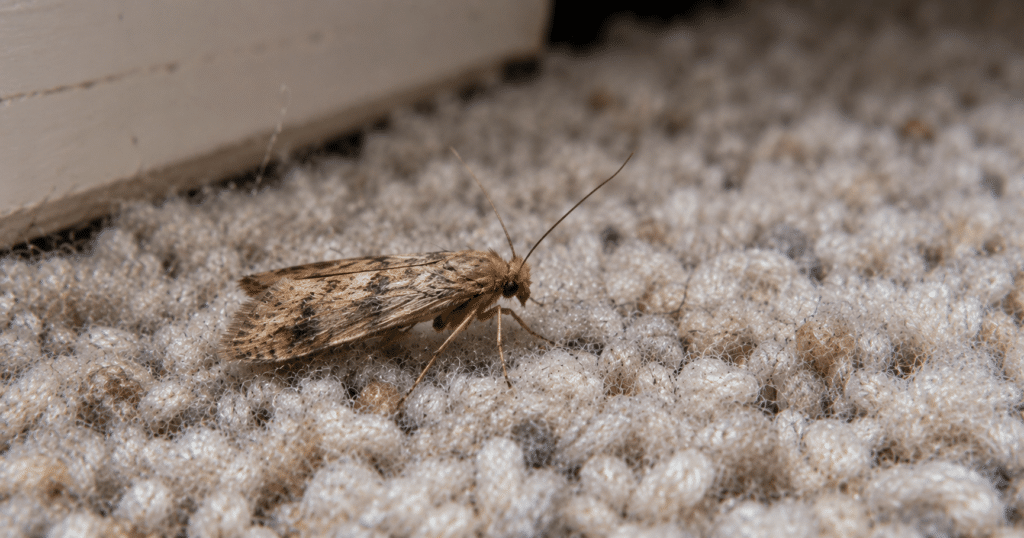
Not every moth in your home is a problem, and the easiest clue is light. Clothes moths hate it. They hide in wardrobes, drawers and under furniture, and when you disturb them they usually scurry across the fabric instead of flying away. If you keep seeing tiny moths in the house circling a lamp or fluttering around the kitchen, you are most likely dealing with pantry moths from your food cupboard, or garden moths that came in through an open door at night.
| Moth type | Where you will see it | What it eats | Telltale sign |
|---|---|---|---|
| Webbing clothes moth | Wardrobes, under rugs, dark corners | Wool, silk, fur, feathers, leather | Silky webbing and holes in fabric |
| Case-making clothes moth | Walls, skirting boards, stored clothing | Wool, hair, lint and other natural fibres | Tiny cases stuck to surfaces |
| Pantry moth | Kitchen, pantry, around lights | Flour, cereals, nuts, pet food | Webbing inside food packets |
| Garden moths | Lights, windows, open doors | Plants outside | Only at night, no damage inside |
The two clothes moths are the ones that ruin wardrobes and carpets. One leaves silky webbing over the fabric it eats, while the other carries a tiny tube-shaped case around as it feeds.
What Attracts Moths Into Sydney Homes?
Clothes moths are not after all your clothes. Their grubs feed on natural animal fibres such as wool, silk, cashmere, fur, feathers and leather. They will also chew through blends that contain some wool, but fabric made only from synthetic material like polyester is safe from them.
So what attracts moths into a typical Sydney home comes down to two things: food and quiet. Our winters are mild, which means heavy jumpers, coats and woollen blankets often sit untouched at the back of the wardrobe for months. That dark, undisturbed spot is exactly where a moth wants to lay its eggs. Clothes put away unwashed make it worse.
Wool carpets and rugs are the other big target, especially the strips along the walls and under beds and sofas where the vacuum rarely reaches. Even your roof can play a part. Old bird nests and dead rodents in the ceiling give moth grubs something to feed on, so if you have ever had a dead rat smell in the roof, it is worth checking above as well as below.
How Do You Know You Have a Moth Infestation in the House?
Most people find a moth infestation in the house through the damage, not the moths. Check for these signs:
- Small, uneven holes in wool, silk or cashmere, often hidden under collars, cuffs and folds
- Bald or thinning patches of carpet along the walls and under furniture, a classic sign of carpet moths eating carpet
- Fine, silky webbing stretched across fabric
- Tiny tube-shaped cases stuck to walls, ceilings or skirting boards
- Gritty, sand-like droppings that are the same colour as the fabric being eaten
It also helps to know what moth larvae look like. They are small, cream-coloured grubs up to about a centimetre long, with a darker head. They avoid light, so you will rarely see them out in the open. Look in wardrobe corners, under rugs, along carpet edges and inside the folds of stored clothes. Finding even one of these signs means the infestation is active, even if you have only seen a single moth.
How Do You Get Rid of Moths in the House Step by Step?
Getting rid of moths only works if you deal with the eggs, grubs and adults at the same time. Miss one stage and the cycle quietly starts again. Take it one room at a time, starting with the worst.
Empty and Sort the Problem Area
Empty the affected wardrobe or drawer. Anything made of natural fibre with holes or webbing goes straight into a sealed plastic bag, so grubs cannot crawl into clean clothes while you work.
Vacuum Where the Grubs Live
Vacuum slowly along skirting boards, inside wardrobes, under the bed and sofa, and on both sides of any rug. When you finish, tip the vacuum contents into a bag, tie it off, and put it straight in the outside bin; otherwise, eggs and grubs can make their way back in.
Wash, Dry Clean or Freeze Everything Affected
Hot washing kills moths at every stage, and dry cleaning suits wool and silk that cannot go in a hot wash. For delicate or special pieces, seal them in a freezer bag and freeze them at minus 18°C or colder for at least two weeks, then leave the bag sealed for a day while it returns to room temperature.
Clean and Seal Your Storage
Wipe out shelves and drawers before anything goes back. Only return clean items, and store seasonal clothing in vacuum bags or plastic tubs with tight lids. Cardboard boxes and open bags do very little to keep moths out.
Deal With the Cracks You Cannot Reach
Grubs often hide in the small gaps around skirting boards, shelf joins and floor edges. Most sprays only kill the grubs they actually touch, which is why these hidden gaps are where home treatments usually fall short.
Does a Moth Killer Spray or Trap Actually Work?
Most moth killer products from the supermarket or hardware store are aimed at the adult moth. The catch is that adult moths do not eat fabric at all. The damage is done by the grubs, and most sprays and traps barely touch them.
Moth traps use a scent that lures male clothes moths onto a sticky pad. They show you whether moths are active and slow breeding a little, but they will not clear an infestation on their own. Pantry moth traps use a different scent, so make sure you buy the right type. Lavender sachets do nothing to grubs that are already feeding.
| Method | Adults | Eggs | Grubs | Best for |
|---|---|---|---|---|
| Moth trap | Males only | No | No | Checking if moths are active |
| Moth killer spray | If hit | Rarely | If hit | Moths you can see |
| Lavender sachets | May keep away | No | No | Drawers and stored clothes |
| Hot wash or dry cleaning | Yes | Yes | Yes | Clothes, wool and silk |
| Freezing at minus 18°C for 2+ weeks | Yes | Yes | Yes | Delicate or special items |
| Thorough vacuuming | Removes many | Removes many | Removes many | Carpet edges and wardrobes |
| Professional treatment | Yes | Varies | Yes | Gaps, edges and hidden spots |
The simple rule is this: anything that only reaches the adults buys you time. Heat, cold, vacuuming and treatments that reach the grubs are what finish the job.
Why Do Moths Keep Coming Back After You Clean?
You clear out the wardrobe, spray everything, the moths vanish for a few weeks, and then they are back. There are usually three reasons.
The first is eggs. Moth eggs are tiny and glued firmly to fabric, so a quick spray or shake-out leaves plenty behind. When they hatch, the whole thing starts again. The second is a hiding spot you have not found. If the wardrobe is clean but a rug in the spare room or the carpet under the bed is still infested, the moths simply move back in. The third is a forgotten food source, such as a box of old woollens in the garage, a stored quilt or a feather pillow nobody has touched in years.
That is why stopping a moth infestation means treating the whole house, not just the room where you first saw holes. If moths return within a few weeks of a thorough clean, there is almost always a hidden source still feeding them, and that is when a professional inspection saves time and clothing.
How Long Does It Take to Eradicate Moths?
People often ask how long moths live inside a house. Adult moths only live a short time, but the full cycle from egg to grub to moth can take up to a year in cool conditions and far less in warm weather. Through a Sydney summer, moths can breed up to three times in a year.
For anyone working out how to eradicate moths, that means thinking in two stages. The clean-up itself usually takes a weekend. The checking stage takes longer, because eggs laid before you started can still hatch. Keep a moth trap in each treated wardrobe and check it every two weeks for two to three months.
Which Moth Deterrent Habits Stop Them Returning?
The best moth deterrent is not something you buy. It is a home where moths cannot find quiet, dark fabric to eat. Wash or dry clean woollens before you pack them away for summer, then store them in vacuum bags or sealed tubs. Once a month, move and shake out the clothes hanging in your wardrobe, because moths will not settle where things are regularly disturbed.
When you vacuum, give the forgotten edges some attention: under the bed, behind the wardrobe, and beneath rugs, not just the open floor. If you are wondering how to eliminate moths for good, these small habits matter more than any spray. Mothballs still turn up in older advice, but many of the traditional types are no longer recommended, so if you use any product, follow the label exactly.
What Does Professional Moth Treatment in Sydney Involve?
If home methods have not worked, or the damage has spread to carpets and several rooms, professional moth treatment goes after the grubs in places you cannot reach. When you book moth pest control with Apex Pest Control, here is what happens:
- Inspection. We check wardrobes, carpet edges, furniture, storage and roof access to confirm whether you have clothes moths, carpet moths or a lookalike such as carpet beetles.
- Targeted treatment. Licensed products go into the skirting gaps, shelf joins and carpet edges where grubs hide, rather than being sprayed across your living areas.
- A clear clean-up plan. You get a simple list of what to wash, freeze or seal, so your clean-up and our treatment work together.
- Follow-up. Every treatment comes with a 6-month warranty. If moths come back in that time, so do we.
Many people searching for a moth exterminator assume the house will need fumigating. Most homes do not, and we will tell you how long to keep children and pets out of treated rooms.
How Can You Tell the Moths Are Really Gone?
An empty moth trap is a good sign, but it is not proof on its own, because traps only catch male moths. Give it at least two months and look for three things together. The traps should stay empty, check after check. The hiding spots you found should stay free of new webbing, cases, and droppings. And there should be no fresh holes or bare patches on the clothes and carpet edges you checked before treatment.
If any one of those slips, the moths are still there somewhere. The sooner you act, the smaller the job.
Frequently Asked Questions
1. How do I get rid of moths in my house permanently?
Deal with the grubs as well as the moths. Vacuum the edges, wash, dry clean or freeze anything affected, then store clean clothes in sealed containers. Keep checking for a few months, because eggs laid before you started can still hatch.
2. Why do I have tiny moths in my house?
Tiny moths flying around lights or the kitchen are usually pantry moths or garden moths, because clothes moths avoid light. Check flour, cereal, nuts, and pet food for webbing. If the moths are inside wardrobes and scurrying rather than flying, clothes moths are more likely.
3. What kills moth eggs and larvae?
Heat, cold, and direct contact. Hot washing and dry cleaning work for clothes; freezing at minus 18°C for at least two weeks suits delicate items, and targeted treatment kills the grubs it reaches. Scented sachets and moth traps do not affect eggs or grubs.
4. Do moths go away on their own?
Rarely. As long as the grubs have undisturbed natural fabric to eat, the cycle keeps going, and warm weather speeds it up. Moths can seem to disappear in cooler months because they mostly fly when it is warm, but the grubs keep feeding out of sight.
5. How much does moth treatment cost in Sydney?
It depends on the size of your home, how many rooms and how much carpet are affected, the type of moth, and whether follow-up visits are needed. Apex provides free, no-obligation quotes, so you know exactly what is involved before any work starts.
Where to Start
Tonight, take everything out of the bottom of your most-used wardrobe and shine a torch into the back corners. Webbing, cases or sandy droppings mean you have found where the moths are feeding, and that one space is where your clean-up begins.