
Found tiny brown bugs in your bed and assumed the worst? They may not be bed bugs. Carpet beetles, cockroach nymphs, fleas, booklice, spider beetles and ticks are all bugs that look like bed bugs, and they turn up in Sydney bedrooms more often than most people realise. The quickest way to tell them apart is to check the bug’s shape, legs and movement, then look for the signs only bed bugs leave behind: black dots, rusty smears, smooth shed skins and white eggs in the mattress seams.
This matters because each bed bug lookalike needs a different treatment, and treating the wrong pest lets the real one keep spreading. Below you will find a bed bug identification checklist, a side-by-side comparison of the most common lookalikes and clear steps for identifying the small bugs in your bed.
What Do Bed Bugs Look Like? Bed Bug Identification Checklist
Before ruling bed bugs in or out, compare what you found against these features:
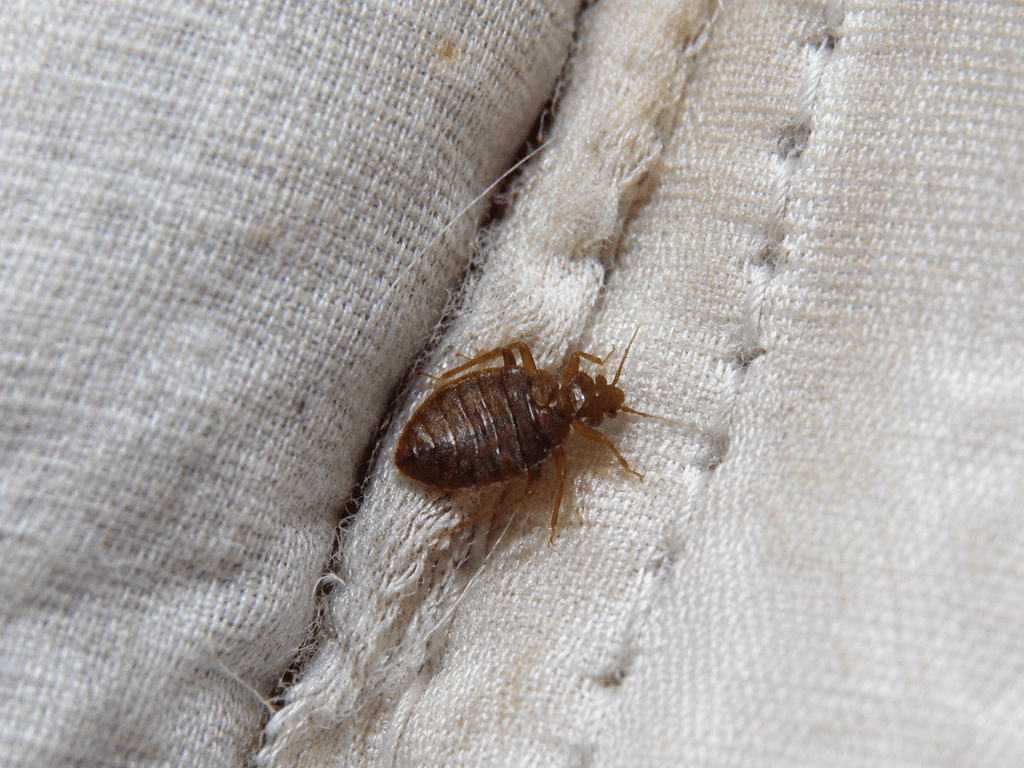
- Adult bed bugs: about 5 to 7 mm long, roughly the size of an apple seed, flat, oval and reddish-brown.
- Fed bed bugs: swollen, longer and darker red after a blood meal.
- Baby bed bugs (nymphs): 1 to 4 mm, pale tan to almost see-through, turning red after feeding.
- Bed bug eggs: white, about 1 mm long, stuck in seams, cracks and screw holes.
- Legs and wings: six legs, short antennae and no wings, so bed bugs cannot fly or jump.
- Movement: a steady crawl, never a quick dart or a jump.
- Hiding spots: mattress seams, bed frames, bedheads and bedside furniture, close to where people sleep.
If the tiny brown bug in your bed has wings, hair, long antennae, eight legs or jumps, it is not a bed bug.
Tiny Brown Bugs in Bed: 7 Bugs That Look Like Bed Bugs
Use this table to compare the small bugs in bed that are not bed bugs but are most often mistaken for them in Sydney homes.
| Bed bug lookalike | How it differs from a bed bug | Where it is usually found | Bites people? |
|---|---|---|---|
| Carpet beetle (adult) | Round, hard-shelled, often mottled or black, can fly | Windowsills, light fittings, bedding near windows | No |
| Carpet beetle (larva) | Long, hairy and banded brown, like a tiny caterpillar | Carpet edges, under beds, wardrobes, woollens | No, but hairs can irritate skin |
| Cockroach nymph | Long antennae and legs, runs fast | Kitchens, bathrooms, near food and water | No |
| Flea | Narrow from side to side, jumps | Pet bedding, carpets, rugs | Yes, mostly ankles and lower legs |
| Booklouse | 1 to 2 mm, pale, soft-bodied | Damp rooms, books, paper, mould | No |
| Spider beetle | Round, shiny body and long legs, like a tiny spider | Pantries and stored food | No |
| Tick | Eight legs instead of six | Pets, or people after bushwalks and gardening | Yes, attaches to the skin |
Carpet Beetle vs Bed Bug: How to Tell the Difference
Carpet beetles are the bed bug lookalike most often found in Sydney beds, so the carpet beetle vs bed bug question is usually the first one to answer.
Adult carpet beetles are 2 to 4 mm long, rounded and hard-shelled. The varied carpet beetle is mottled with white, brown and yellow scales, while other species are plain black, which is why some people search for tiny black bugs in bed rather than brown ones. Adults can fly and are drawn to light, so they often gather on windowsills and on bedding near windows.
Carpet beetle larvae are long, bristly and banded brown, more like a tiny caterpillar than a bed bug. They feed on wool, fur, feathers, silk, lint and dead insects, so they live under beds, along carpet edges and in wardrobes.
How carpet beetles differ from bed bugs:
- Body shape: carpet beetles are round or hairy. Bed bugs are flat, oval and smooth.
- Food: carpet beetles eat natural fibres and do not feed on blood. Bed bugs feed only on blood.
- Shed skins: carpet beetle larvae leave hairy, bristly skins. Bed bug skins are smooth, pale and see-through.
- Damage: carpet beetles leave small holes in woollen clothes, rugs and blankets. Bed bugs leave black dots and rusty smears on bedding.
Carpet Beetles in Bed: Why You Might Still Feel Itchy
Carpet beetles do not bite, but the tiny hairs on their larvae can irritate the skin. The result can be itchy red marks that look a lot like bed bug bites, which is one reason carpet beetles in bed are so often mistaken for a bed bug infestation.
If you have itchy marks but find only hairy larvae, shed skins and fabric damage, with no black dots or rusty smears in the mattress seams, carpet beetles are the more likely cause.
Not sure whether it is bed bugs or a lookalike? Call 0468 288 969 or book bed bug pest control in Sydney online, and we will identify the bugs in your bed and treat the right pest.
Cockroach Nymph vs Bed Bug: Fast Runners in the Bedroom
Young German cockroaches are small, brown and flat, so a cockroach nymph is easily confused with a bed bug. The differences show as soon as it moves:
- Antennae and legs: cockroach nymphs have long antennae and long, spiny legs. Bed bugs have short antennae.
- Colour: German cockroach nymphs are dark brown to black, often with a pale band down the back.
- Speed: cockroach nymphs dart away quickly when disturbed. Bed bugs crawl slowly.
Cockroach nymphs usually live in kitchens and bathrooms, close to food, water and warmth. Finding them in a bedroom often means a larger population elsewhere in the home or building, which calls for cockroach pest control in Sydney rather than bed bug treatment.
Flea vs Bed Bug: Which One Is in Your Bed?
Fleas are tiny, dark reddish-brown and narrow from side to side, while bed bugs are flattened from top to bottom. The simplest test is movement, because fleas jump and bed bugs cannot jump at all.
Fleas in bed usually point to a pet, or to animals living under the house or in the roof. Their bites tend to cluster around the ankles and lower legs, while bed bug bites often appear on skin exposed during sleep. The bites can still look alike, so compare bed bug bites vs flea bites as well as the bugs themselves.
Booklice vs Bed Bugs: Tiny Pale Bugs in Damp Bedrooms
Booklice are among the smallest bugs that look like bed bugs. They are only 1 to 2 mm long, pale and soft-bodied, so they are most often mistaken for baby bed bugs. They feed on mould and microscopic fungi, which is why they appear in damp or humid bedrooms, on books and paper, and around window frames after wet weather.
Booklice do not bite and do not feed on blood. Seeing lots of them is a sign of moisture, and reducing humidity usually reduces their numbers.
Spider Beetles, Ticks and Bat Bugs vs Bed Bugs
- Spider beetles: round, shiny and long-legged, like a tiny spider. They come from stored food in the pantry and can wander into bedrooms, but they do not bite.
- Ticks: a tick swollen with blood can look like a fed bed bug. Count the legs, because ticks have eight and bed bugs have six.
- Bat bugs and bird bugs: close relatives of bed bugs that look almost identical without magnification. They live with bats or birds in roof and wall cavities, and may bite people once those animals leave.
- Bird mites: much smaller than bed bugs and barely visible, they can bite when they leave an abandoned nest in the roof or eaves.
If bites start soon after birds or bats have left the roof, mention it when you book, because the source needs treating as well as the bedroom.
Signs of Bed Bugs vs Lookalikes: What Only Bed Bugs Leave Behind
The surest way to tell bed bugs from lookalikes is the evidence around the bed. Check mattress seams, the bed base, the bedhead and bedside drawers with a torch for:
- clusters of tiny black or dark brown dots, which smear like ink when wiped with a damp cloth
- small rusty smears on sheets and pillowcases
- pale, smooth shed skins in different sizes
- white eggs about 1 mm long in seams and cracks
Finding these alongside the bug makes bed bugs far more likely. Knowing what rusty stains and black dots on sheets mean helps you separate bed bug activity from other marks.
Bites alone cannot confirm bed bugs. Many people do not react to bed bug bites at all, and other bugs and skin conditions can cause similar marks.
How to Identify a Bug Found in Your Bed
Because so many bugs look like bed bugs, a good sample makes bed bug identification quick and accurate:
- Catch it whole: press clear sticky tape over the bug, or tip it into a sealed jar or zip-lock bag.
- Photograph it: take sharp close-ups from above and the side, with a coin or ruler for scale.
- Record where you found it: the mattress, the carpet, a windowsill or near the kitchen all point to different pests.
- Keep the sample: hold on to it until a technician has seen it.
If it turns out to be a bed bug, follow the steps for what to do if you find one bed bug to keep the problem small.
Why Misidentifying Bed Bugs Leads to the Wrong Treatment
Bugs that look like bed bugs are not treated the same way as bed bugs:
- Bed bugs: treatment of the bed, furniture and room, often with follow-up visits.
- Carpet beetles: finding and removing the food source, such as woollens, feathers and lint.
- Cockroaches: baiting and treating where they shelter and breed.
- Fleas: treating pets and the areas where they rest.
Spraying for bed bugs when you have carpet beetles, or the other way around, leaves the real pest in place. Shop sprays used on bed bugs can also scatter them into new hiding spots, so confirm what you have before you treat anything.
What You Should Do If You Find Tiny Brown Bugs in Your Bed
1. Catch a Sample of the Bug
Use clear tape or a sealed jar so the bug can be identified, rather than squashing it.
2. Photograph the Bug and the Bedding
Take photos of the bug and anything around it, such as dots, stains, skins or damaged fabric.
3. Check the Mattress and Bed Frame for Bed Bug Signs
Look along seams, under the mattress, around the bedhead and in bedside drawers.
4. Hold Off on Bed Bug Sprays
Avoid shop sprays and foggers until the pest is identified, as the wrong product can make the problem harder to treat.
5. Book a Pest Inspection
A licensed technician can identify the bug, find where it is coming from and recommend the right treatment.
Conclusion
Tiny brown bugs in your bed are not always bed bugs. Carpet beetles, cockroach nymphs, fleas, booklice, spider beetles and ticks are the most common bugs that look like bed bugs, and each one is treated differently. Check the shape, legs and movement, look for black dots, rusty smears and smooth shed skins in the mattress seams, and keep a sample of what you found.
An experienced pest exterminator can confirm whether you have bed bugs or a lookalike, then treat the right pest the first time.
Call 0468 288 969 to book a same-day pest inspection in Sydney with our licensed and insured team, and find out exactly what is in your bed.
Frequently Asked Questions
1. What Bugs Look Like Bed Bugs but Are Not?
The most common bed bug lookalikes are carpet beetles and their larvae, German cockroach nymphs, fleas, booklice, spider beetles and ticks. Bat bugs and bird bugs look almost identical to bed bugs, but they come from bats or birds in the roof.
2. What Are the Tiny Brown Bugs in My Bed?
They could be bed bugs, carpet beetles, cockroach nymphs or fleas. A flat, oval, wingless bug about the size of an apple seed, found with black dots or rusty smears in the mattress seams, points to bed bugs.
3. Is It a Carpet Beetle or a Bed Bug?
Adult carpet beetles are round, hard-shelled and can fly, and their larvae are hairy. Bed bugs are flat, oval, smooth and wingless. Carpet beetles eat fabric and fibres, while bed bugs feed only on blood.
4. Do Carpet Beetles Bite?
No. Carpet beetles do not bite, but the hairs on their larvae can irritate the skin and cause itchy marks that look like bed bug bites.
5. What Do Baby Bed Bugs Look Like?
Baby bed bugs are 1 to 4 mm long and pale tan to almost see-through, turning red after a blood meal. Pale booklice are often mistaken for them, but booklice are softer and live in damp areas.
6. How Can I Tell a Flea From a Bed Bug?
Fleas jump and are narrow from side to side, while bed bugs crawl and are flat from top to bottom. Flea bites are most common on the ankles and lower legs.
7. Should I Squash the Bug I Found in My Bed?
It is better to catch it whole with clear tape or in a sealed jar, so it can be identified accurately.
8. Will You Treat One Room or the Whole Unit?
That depends on what the inspection finds. We identify the pest, check the bedrooms and nearby rooms, then recommend treating the areas where it is found or likely to have spread.
9. What Affects the Size of the Job?
The pest found, how far it has spread and how many rooms and furniture items are affected all shape the treatment. An inspection confirms the scope before treatment starts.