

You pulled back the doona and found rusty stains on the sheets, or tiny black dots along the edge of the mattress. These marks can be bed bug stains, especially if they sit near the mattress seams and you have been waking up with bites. Rusty or reddish stains usually come from blood, and small black or dark brown dots that look like marker pen are often bed bug droppings.
Stains alone do not prove you have bed bugs, because blood from a scratched bite, flea dirt, cockroach droppings and mould can all leave similar marks. Finding them together with live bugs, shed skins or eggs is what confirms it.
This guide explains what bed bug stains on sheets look like, how to tell them from other marks, how to check your mattress properly and what to do next in your Sydney home, unit or share house.
What Causes Rusty Stains and Blood Stains on Sheets?
Rusty, reddish-brown stains on sheets and pillowcases are usually dried blood, and the same rust-coloured stains can appear on a mattress. With bed bugs, they tend to appear in two ways:
- A crushed bed bug: a bug that has recently fed can be squashed when you roll over in your sleep, leaving a small smear.
- A bite that bled: a bite can leak a small amount of blood onto the sheet, particularly if it has been scratched.
Fresh marks look red and turn rusty brown as they dry. Blood stains on sheets are not proof on their own, since a scratched pimple, a nosebleed or a small cut can leave the same mark. What matters is the pattern. Repeated small smears where you sleep, along with new bites, are worth checking properly.
Black Dots on Sheets and Mattresses: What Bed Bug Droppings Look Like
Tiny black or dark brown dots on sheets are often bed bug droppings, also called bed bug faeces or faecal spots. Because bed bugs feed only on blood, their droppings are digested blood, which is why the spots are dark rather than red.
Bed bug droppings usually look like this:
- small dots, about the size of a full stop or the tip of a fine marker pen
- black or dark brown, and slightly raised or soaked into the fabric like ink
- grouped together, often in clusters of 10 or more
- concentrated along mattress seams, piping, labels and corners of the bed base, where bed bugs shelter
Black spots on a mattress seam are a stronger warning sign than a single dot on a sheet, because they show where bed bugs have been resting.
Bed Bug Stains vs Other Marks on Sheets and Mattresses
Several other things can look like bed bug stains. Here is how they usually differ:
- Bed bug droppings: dark dots in clusters that smear like ink when dabbed with a damp cotton bud.
- Cockroach droppings: can look similar but do not smear when wet, and are more often found in kitchens and bathrooms than on a bed.
- Flea dirt: small black specks that turn reddish-brown on a damp tissue. It usually comes with pets, and bed bug bites vs flea bites can also look different on your skin.
- Mould: tends to spread in patches or a speckled area, often with a musty smell and on damp parts of the mattress.
- Lint, crumbs and dirt: usually brush away and do not soak into the fabric.
- Everyday blood marks: a nosebleed, cut or scratched skin can leave a similar rusty stain, usually without the dark dots nearby.
The damp cotton bud test is a useful guide, not a final answer. If the marks are in the mattress seams or you keep getting bites, have them checked.
Other Signs of Bed Bugs on Sheets and Mattresses
Stains become much more meaningful when you find them with other signs of bed bugs. Look for:
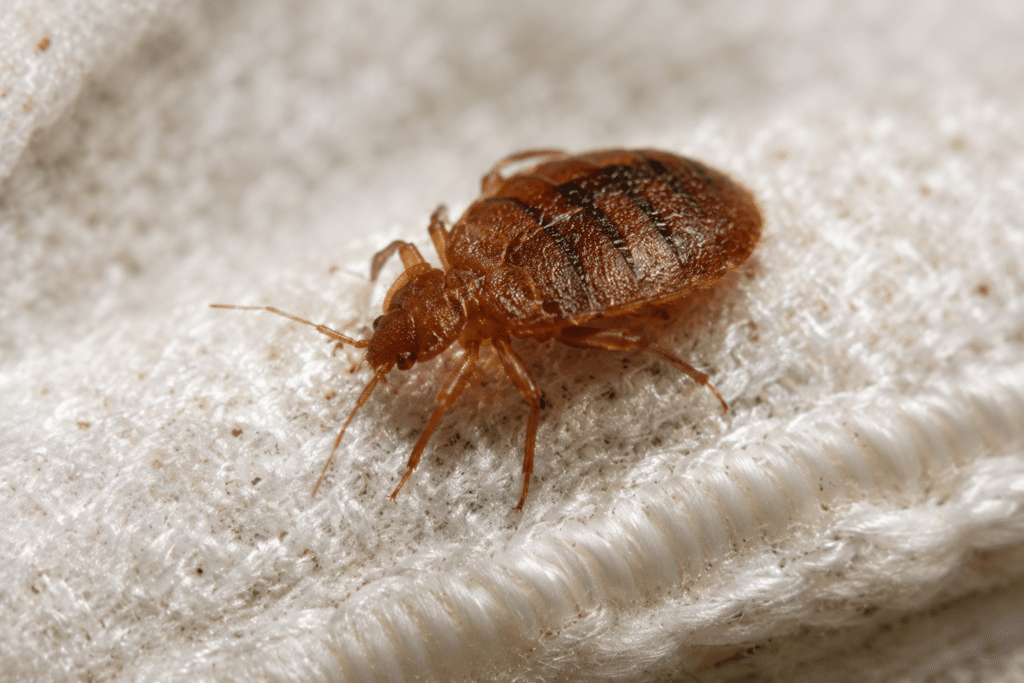
- Live bed bugs: flat, oval and reddish-brown, about the size of an apple seed when fully grown. Young bugs are smaller and paler.
- Shed skins: pale, empty casings the same shape as the bug. Young bed bugs shed their skin five times as they grow.
- Eggs: white, about 1 mm long, and glued to rough surfaces and seams.
- Bites: regular new bites when you wake up, although bites alone cannot confirm bed bugs.
- A smell: large infestations may give off a sickly sweet smell.
Live bugs are the clearest evidence of an active problem, and finding even one bed bug is reason enough to act.
How to Check Your Mattress for Bed Bug Stains and Black Spots
Strip the bed in good light and use a torch. Work slowly, starting where you sleep:
- Sheets and pillowcases: look for rusty smears and dark dots before anything goes in the wash.
- Mattress seams and piping: check the full length, including around the head of the bed, tags and any folds.
- The underside and bed base: turn the mattress if you can, and check corners, staples and the fabric under the base.
- The bed frame and headboard: look into joints, screw holes and the gap where the headboard meets the wall.
- Nearby furniture: check bedside drawers, skirting boards and the edges of the carpet.
Knowing where bed bugs hide besides the bed helps here, because the marks closest to their hiding spots are usually the heaviest.
Do Old Bed Bug Stains Mean You Still Have Bed Bugs?
Not always. Blood marks do not wash out easily and faecal spots can last for a long time, so you cannot tell the age of a stain just by looking at it. Marks on a mattress may come from an earlier infestation, or from a previous owner if the bed or base was bought second-hand.
Old marks are more likely when they are faded, there are no new bites and no live bugs, eggs or fresh skins can be found. Fresh activity is more likely when new spots appear on clean sheets. An easy way to tell is to put on freshly washed, light-coloured sheets, and check them each morning for new marks.
Found rusty stains or black dots on your mattress? Call 0468 288 969 and tell us what you found, or book bed bug treatment in Sydney online, and we will tell you what the marks mean.
Should You Wash Stained Sheets or Throw Out the Mattress?
Photograph the marks first, because the pictures will help when you book an inspection. After that, wash bedding in water above 60°C and dry it in a hot tumble dryer for at least 30 minutes. Bag it before carrying it through the house, so that nothing drops along the way.
Do not rush to get rid of the bed. Stains are a reason to investigate, and most people do not need to throw out the mattress after bed bugs. Dragging it through the home can spread them, and a new mattress can quickly pick up bugs left in the frame and the room.
What You Should Do If You Find Bed Bug Stains on Your Sheets
1. Photograph the Stains
Take clear photos of the marks on the sheets and mattress, along with their location, before you wash or move anything.
2. Check the Seams With a Torch
Look along the mattress seams, the bed base and the frame for live bugs, shed skins and eggs. These tell you far more than a stain alone.
3. Try the Damp Cotton Bud Test
Gently dab one dark dot. If it smears like ink, bed bug droppings are more likely.
4. Wash the Bedding and Leave the Furniture in Place
Hot wash and hot dry your bedding, but avoid moving the mattress, base and furniture to other rooms. Hold off on shop sprays until the problem has been identified.
5. Book a Bed Bug Inspection
A licensed residential pest control technician can identify what the marks are, find out whether bed bugs are active and show you how far they have spread. Mention the marks when you book and keep your photos handy, so the technician knows where to start.
Conclusion
Rusty stains on sheets usually come from blood, and black dots along the mattress are often bed bug droppings. Neither proves an active infestation on its own, but with bites, shed skins, eggs or live bugs nearby, the answer is usually clear.
An experienced pest exterminator can confirm what the marks are and treat the bed and the room together if bed bugs are found. Acting early also makes it more likely to stay a smaller job.
Call 0468 288 969 to book a bed bug inspection in Sydney with our licensed and insured team, and tell us about the marks you have found.
Frequently Asked Questions
1. What Do Bed Bug Stains Look Like on Sheets?
Bed bug stains usually appear as small rusty or reddish-brown smears from blood, and tiny black or dark brown dots from droppings. The dark dots often appear in clusters and soak into the fabric like ink.
2. What Do Bed Bug Droppings Look Like?
Bed bug droppings look like tiny black or dark brown dots, about the size of a full stop or the tip of a fine marker pen. They often appear in clusters along mattress seams, and they smear like ink when dabbed with a damp cotton bud.
3. What Do Bed Bugs Look Like on a Mattress?
Adult bed bugs are flat, oval and reddish-brown, about the size of an apple seed, and usually hide in seams, piping and tags. You may also see pale shed skins, white eggs about 1 mm long and clusters of dark spots.
4. Why Do I Have Blood Stains on My Sheets When I Wake Up?
Blood stains can come from a crushed bed bug or a bite that bled, but also from a scratched spot, a small cut or a nosebleed. Check the mattress seams for dark dots, skins and live bugs to see whether bed bugs are the likely cause.
5. Can Bed Bug Stains Be Washed Out?
They can be hard to remove, because blood and droppings soak into fabric. Marks that stay on a sheet or mattress after washing do not always mean bed bugs are still active, so look for new marks and other signs as well.
6. Can You Have Black Dots on a Mattress Without Bed Bugs?
Yes. Mould, flea dirt, cockroach droppings and general dirt can all leave dark marks, and spots may also remain from an old infestation. Their location, pattern and any other signs help show the cause.
7. Are Bed Bug Droppings Dangerous?
Bed bugs are not known to spread disease, although they can cause itching, skin reactions and lost sleep. See your doctor if you are concerned about bites or a skin reaction.
8. Will You Treat One Room or the Whole Unit?
That depends on what the inspection finds. If the signs are limited to one bedroom, treatment may focus on that room, and we also check nearby rooms and shared walls because bed bugs can move through gaps.
9. What Affects the Size of the Job?
The size of the job depends on how many rooms, beds and couches are affected, how far the bed bugs have spread and how much furniture needs treating. An inspection confirms the scope before treatment starts.