

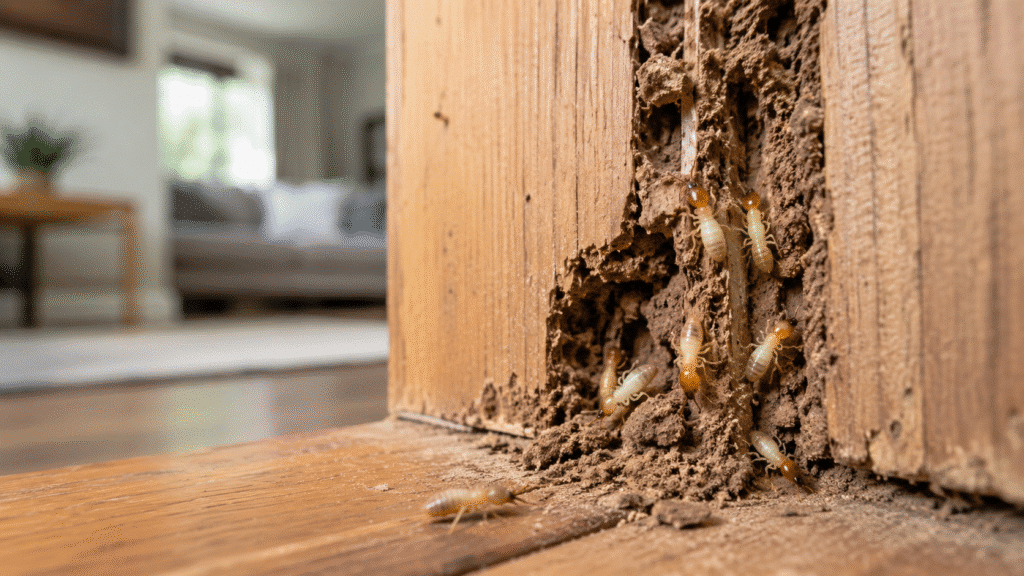
A floorboard that gives underfoot is your house telling you something is wrong beneath the surface. The cause is almost always moisture or termites, and they demand very different responses. This guide shows you how to read the clues, and why a professional termite inspection Sydney homeowners can book same day is the fastest way to know for certain.
Guessing wrong here is expensive. Treat termites as a plumbing issue and the colony keeps eating while you replace boards; treat rot as termites, and the leak keeps spreading.
The two problems look almost identical from above, which is why many homeowners only learn the real cause after a board gives way. The licensed technicians at Apex Pest Control assess soft and spongy floors across Sydney and can tell you in one visit whether you are dealing with water, insects, or both.
What Causes Soft Floorboards? Moisture Damage vs Termite Activity
Timber floors fail from the inside. Water damage sets in when a slow leak, rising damp or poor subfloor ventilation keeps the boards wet, letting fungal decay soften the fibres until the timber crumbles, weakening gradually and evenly across the damp zone.
Termite damage works differently. The termites Sydney properties battle most are subterranean species that travel up from the soil, stay hidden inside the timber, and eat it from within. They hollow out the core while leaving a thin outer shell intact, so a board can look normal right up until it flexes under your weight. Because these insects need moisture, they are drawn to the same damp subfloor conditions that cause rot, which is why the two problems are so easy to confuse. A professional pest exterminator can inspect the affected timber and surrounding subfloor to determine whether termites, moisture damage, or a combination of both is responsible.
Signs Your Soft Floorboards Point to Water Damage
Moisture leaves visible, surface-level evidence:
- Dark staining, watermarks or discolouration on or around the affected boards.
- Swelling, cupping or warping, with boards lifting at the edges.
- A damp, musty smell, sometimes with visible mould along the skirting or grout lines nearby.
- Softness concentrated near wet areas such as showers, laundries, dishwashers or external walls.
Water-damaged timber feels spongy and consistent across the wet patch, and it crumbles into soft, damp fragments when it breaks. If the softness traces back to a tap, appliance or drain, moisture is the likely driver.
Signs Termites Are Behind Your Soft Floorboards
Termite evidence hides below the surface, so the clues are subtler:
- A hollow, papery sound when you tap the board, instead of the dull thud of solid timber.
- A wafer-thin surface layer that punctures easily, revealing tunnels packed with soil-like material.
- Mud tubes, pencil-width earthen tunnels, running along piers, foundations or subfloor timbers.
- Blistered paint, tight doors or sagging floor sections nearby.
Unlike rot, termite damage often appears in dry-looking boards far from any leak, because the insects carry their own moisture through their mud tubes. If you spot galleries or live insects, stop investigating and leave everything in place, since disturbed termites retreat and become much harder to treat.
Simple Checks to Tell the Difference at Home
Tap the suspect board and compare the sound with a healthy one; hollow suggests insects, dull and damp suggests water. Press a screwdriver gently against the surface: rot gives way as mushy fibres, while termite-eaten timber punctures into clean internal galleries. Map the softness too: moisture damage radiates out from its source, while termite damage follows the feeding path and can skip between boards.
These checks narrow the odds, but they cannot see inside walls, piers or joists where the real activity sits. The termite pest control Sydney specialists provide goes further, using moisture meters and thermal imaging to confirm what is active and where without ripping up your floor.
Not sure what is under your floor? Call Apex Pest Control on 0468 288 969 and book a same-day floor and subfloor assessment anywhere in Sydney.
Why Water Damage and Termites Often Arrive Together
Finding one problem raises the odds of the other. Subterranean termites seek out damp timber because it is softer to chew and keeps the colony humid, so a leaking shower base or poorly drained subfloor is an open invitation.
Fixing the leak alone does not remove an established colony, and treating the colony without fixing the moisture invites the next one. The long-term termite protection Sydney homes depend on requires both: leak repairs, better drainage and ventilation, and a monitored barrier or baiting system between the soil and your structural timbers.
When to Book a Professional Termite Inspection in Sydney
Book an inspection the moment softness cannot be traced to a fresh water source. A qualified termite exterminator Sydney residents trust will examine the subfloor, roof void, fencing and garden timbers, check moisture levels and identify whether activity is live, historic or absent, then give you a written report on what it means for your home.
If termites are confirmed, the right termite treatment depends on the species, infestation size and your property’s construction, ranging from colony eradication to chemical soil barriers and baiting stations. Act early, and you repair a few boards; act late, and you can be replacing structural timbers.
What You Should Do About a Soft Floorboard
1. Look for moisture clues first
Check the area around the soft board for stains, swelling, a musty smell and leaks from nearby showers, sinks, appliances or external walls. Moisture damage almost always sits close to its source, so follow the plumbing where you can. Softness with no water source in sight is a red flag for termites and deserves a closer look.
2. Tap and compare the sound
Tap the soft board, then tap a healthy board in the same room and listen to the difference. Solid timber returns a dull, dense thud, while termite-eaten timber sounds hollow and papery because only a thin shell remains. Repeat the test across a few boards to map how far the problem extends.
3. Do not disturb suspected termite activity
Avoid lifting boards, spraying insects or breaking open galleries, however tempting it is to investigate further. Disturbed termites abandon the exposed area quickly and resurface somewhere harder to find, which makes eradication slower and more expensive. Leave everything exactly as you found it until a technician has seen it.
4. Fix leaks and improve subfloor airflow
Repair dripping pipes and taps, clear blocked subfloor vents, and make sure stormwater drains away from the house instead of pooling beneath it. Dry, well-ventilated timber resists fungal decay and holds far less appeal for termites, so these fixes protect whichever repair you end up making.
5. Book a professional inspection
Have a licensed technician confirm the cause before you spend money on repairs, because replacing boards over an active colony or an unfixed leak only resets the clock. A thorough assessment covers the subfloor, moisture readings and surrounding timbers, and gives you a written record of exactly what needs fixing.
Conclusion
A soft floorboard should never be sanded over or ignored; it is the visible tip of either spreading moisture or an active colony in your subfloor. Water damage announces itself with stains, swelling and a musty smell, while termites hollow timber silently and leave little more than a papery shell behind. Confirm the cause before repairing anything, because the wrong fix wastes money and buys the real problem more time. Apex Pest Control provides the termite inspection Sydney homeowners rely on, backed by the full termite control Sydney properties need if activity is found. If your floor is telling you something, book an inspection and find out what it is saying.
Call 0468 288 969 or request a free, no-obligation quote online, and get a definitive answer on your floorboards this week.
Frequently Asked Questions
How do I know if my soft floorboards are termites or water damage?
Water damage usually shows stains, swelling and a musty smell near a wet area, while termite damage sounds hollow and hides inside dry-looking boards. A professional termite inspection Sydney technicians carry out with moisture meters and thermal imaging gives you a definitive answer without pulling up the floor.
What does termite damage in floorboards look like inside?
The timber is hollowed into layered galleries that follow the grain, often packed with a dry, soil-like material called mudding. The outer surface stays thin and intact, which is why the damage goes unnoticed until the board flexes or punctures.
Can water-damaged floors attract termites?
Yes. Subterranean termites are drawn to damp, softened timber, so a long-running leak can invite an infestation on top of the rot. Fixing moisture problems quickly is one of the most effective forms of prevention.
Should I lift or poke a soft floorboard myself?
Gentle testing is fine, but stop as soon as you see galleries, mud or live insects. Disturbing active termites causes them to retreat deeper into the structure, which makes locating and eradicating the colony harder.
How often should Sydney homes be inspected for termites?
At least once a year is the widely recommended interval in Australia, with more frequent checks for homes near bushland, waterways or with previous activity. Regular inspections catch colonies while the damage is still minor and inexpensive to repair.
What happens if termites are found under my floor?
Your technician will map the activity and recommend a treatment plan suited to the species and your property, such as colony eradication, a chemical soil barrier or monitored baiting. Apex backs its work with a 6-month warranty.
