
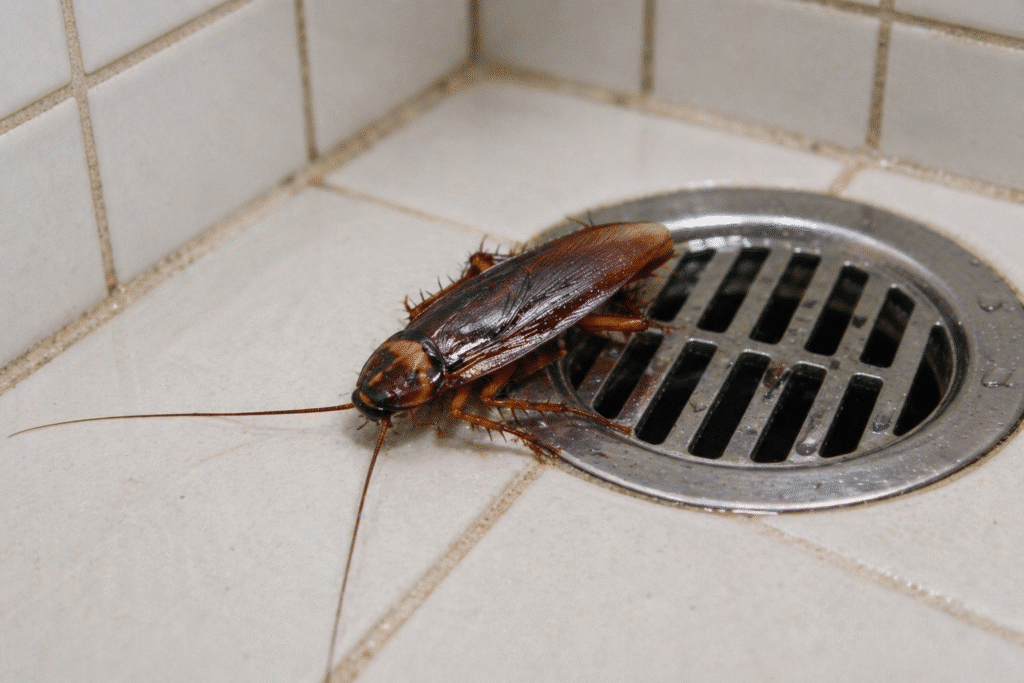
American cockroaches coming up through drains are one of the clearest signs of an established colony breeding inside your sewer or pipe system. The one you can see is never the only one. Understanding what this means for your home is the first step to dealing with it properly.
You head to the bathroom late at night and spot a large, reddish-brown cockroach crawling out of the shower drain. Your first instinct might be to squash it and move on. But that single cockroach emerging from your drain is not a random event. It is a signal that something far larger is living beneath your home right now, and in many cases, it is the point where homeowners start realising the need for a professional pest exterminator to properly deal with the source.
In many homes, American cockroaches appearing in drains are more common than people realise. The combination of moisture, food residue, and warm, enclosed pipe systems creates the ideal environment for them to thrive unnoticed. The real concern is not the single cockroach you see, but the hidden colony breeding within your drains and sewer lines, slowly spreading through your home, which is why a targeted treatment from a pest exterminator is often required to eliminate the infestation at its root.
Can Cockroaches Really Come Up Through Drains?
Yes. Unlike the small German cockroaches that live in kitchen cupboards, American cockroaches are built for dark, damp, underground spaces. Sewers, stormwater pits, and drain pipes are their natural habitat. They get into your home in a few ways:
- Climbing: they grip and climb the inside of pipes, particularly older pipes with rough or corroded walls, and come out through the drain grate.
- Through a dry trap: every drain has a U-shaped P-trap that holds water as a seal. When that water evaporates, there is an open path from the sewer into the room.
- Swimming short distances: a full trap is a good barrier but not a perfect one. American cockroaches can survive underwater for a surprisingly long time, so a shallow trap may not stop them.
- Around the pipe, not through it: gaps where waste pipes pass through floors, walls, and cabinets let them bypass the drain completely.
So if you have been wondering “can cockroaches come from drains?”, the answer is almost certainly yes, and the drain is showing you where they are getting in.
Why Cockroaches Are Coming Out of Your Drains in Melbourne
Most Melbourne homes we inspect for drain cockroaches have at least one of these conditions:
- Rarely used drains. Spare bathroom showers, laundry floor wastes and guest ensuite basins can lose their water seal within weeks, especially in summer.
- Hot weather. Melbourne’s hot spells make cockroaches more active, and they move towards cool, moist spaces such as your bathroom.
- Heavy rain. Downpours flood stormwater and sewer lines and push cockroaches up towards drier ground, often the same night.
- Older plumbing. Many Melbourne suburbs with Victorian terraces and Federation homes still have older clay sewer pipes, where cracks, tree roots and failed joints give cockroaches more places to live.
- Food in the pipes. Hair, soap scum, grease and food scraps inside drains keep them fed just below your floor.
Shower, Sink, Floor Drain or Toilet: Where Cockroaches Get In
Any drain connected to your waste system can become an entry point. These are the most common:
- Shower drains: the most common spot. Hair and soap build-up just below the grate often feeds cockroaches coming out of your shower drain.
- Bathroom floor drains: floor wastes are rarely used, so their traps dry out quickly and become an open doorway.
- Kitchen sink drains: food residue and grease in the waste pipe draw cockroaches up towards your food preparation areas.
- Laundry tubs and floor wastes: often overlooked, but connected to the same system as the rest of the house.
- Toilets: cockroaches rarely swim up through the bowl. They usually enter through a gap where the toilet pan meets the floor or a perished seal at the sewer connection.
- Subfloors and outdoor drains: subfloor drainage, grated pits and cracked outdoor gullies give cockroaches a base right under your floorboards.
If you keep finding roaches in your bathroom, this is why: it has the most drains, the most moisture, and often the least-used traps in the house.
What Are Sewer Cockroaches, and Are They Dangerous?
“Sewer cockroach” or “sewer roach” is the everyday name for the American cockroach. They are large (typically 35 to 40mm), reddish-brown with a pale band behind the head, very fast, and mostly active at night.
What do sewer roaches eat? Almost anything organic: food waste, grease, hair, paper, and decaying matter in pipes. That diet is exactly the problem, and it makes them a genuine health risk:
- Bacteria: they travel through sewage before walking across your benchtops and sinks. Cockroaches are known carriers of bacteria such as Salmonella and E. coli.
- Allergens: droppings, shed skins, and egg cases can trigger asthma and allergies, particularly in children.
- Food contamination: once they reach the kitchen, stored food and food preparation surfaces are exposed.
So, are sewer roaches dangerous? They are not aggressive, but a cockroach from a drain has come from a far dirtier place than one found near the bin.
What to Do If a Cockroach Just Came Up Your Shower Drain
An American cockroach just climbed up your shower drain, and you are not sure what to do? Here is a calm plan for tonight.
1. Deal with the one you can see
Kill or trap it, then wipe nearby surfaces with hot soapy water or disinfectant, because it has come straight from the pipes.
2. Run water down every drain
Run every shower, basin, tub and floor waste for about 30 seconds, including spare bathrooms and the laundry, to refill the traps.
3. Cover the drain overnight
Use a drain plug, a fine-mesh cover, or a sealed zip-lock bag of water laid over the grate.
4. Book an inspection if it happens again
One cockroach can be a stray. Repeat sightings, or cockroaches from more than one drain, usually point to an infestation in the pipes or subfloor.
How to Stop Cockroaches Coming Up Drains
These steps make it much harder for cockroaches to get in:
- Keep traps full: run water through rarely used drains at least once a week.
- Fit drain covers: snug, fine-mesh covers for shower drains and floor wastes are cheap and effective, and plug basins and tubs overnight.
- Clean your drains regularly to remove hair, soap scum and food residue. Enzyme cleaners are gentler on pipes than caustic products.
- Seal gaps where pipes pass through floors, walls and cupboards, and around the toilet base.
And these common fixes do not work long-term:
- Boiling water: it only kills cockroaches near the top of the drain, and repeated use can damage PVC pipes and older joints.
- Bleach and caustic drain cleaners: they will not reach the source and can corrode seals and fittings.
- Surface sprays: these often drive cockroaches back into the pipes for a week or two before they return.
Prevention helps keep new cockroaches out, but it does not treat the ones already living in your pipes or subfloor. That is where professional cockroach pest control makes the difference.
When DIY Is Enough and When to Call a Pest Controller
Not every sighting needs a technician. Here is an honest way to decide.
DIY is probably enough if:
- you have seen one cockroach, once, from a drain that is rarely used
- refilling the trap and fitting a cover stops further sightings
It is time to call a professional if:
- cockroaches keep coming out of drains after you have refilled traps and fitted covers
- you are seeing them in more than one room or drain
- You have spotted small nymphs, droppings or egg cases near drains, skirting boards or cupboards
- You live in an older home, apartment or strata building with shared plumbing
- Someone at home has asthma or allergies, or you have a baby in the house
- You run a café, restaurant or commercial kitchen, where floor drains are a common source
If two or more of these apply, a drain cockroach infestation is likely, and a targeted treatment will save you weeks of chasing individual cockroaches.
How Apex Treats Drain Cockroaches in Melbourne Homes
Here is what a drain cockroach visit from Apex looks like:
- Inspection: a licensed technician checks every drain, floor waste and pipe penetration, plus the subfloor and outdoor pits where accessible, to find where cockroaches are living and getting in.
- Targeted treatment: professional products are applied into drains, voids, pipe entry points, and hiding spots, not just sprayed on the surface.
- Entry point advice: we show you which gaps, traps, or covers need attention and flag any plumbing issues a plumber should look at.
- Warranty and prevention: your treatment is backed by a 6-month warranty, with ongoing plans available for residential, strata buildings and commercial pest control.
Treatments start from $89, and we confirm the price before any work begins. After more than 10 years in Melbourne, our team knows how local sewers and older plumbing behave.
The Bottom Line on Cockroaches in Your Drains
A cockroach coming up your drain is a sign that American cockroaches have a way in, and often that more are living below. Refilling traps and fitting covers helps, but if cockroaches keep coming up your drains, treating the source is the only way to break the cycle.
Frequently Asked Questions
Is it normal to have cockroaches coming up drains in Melbourne?
It is common, especially in warmer months and after heavy rain, but it should not be ignored. It usually means a dry trap or cockroaches living in the pipes or subfloor. If refilling traps and fitting covers does not stop it, book an inspection.
Do cockroaches live in drains and pipes?
Yes. American cockroaches live and breed in sewers, stormwater pits and drain pipes, and shelter in subfloors and wall voids near plumbing. That is why treatment needs to reach beyond the drain opening.
Can cockroaches come up through the toilet?
Rarely through the water in the bowl. More often they get in through gaps around the toilet base or a perished seal at the sewer connection, which resealing usually fixes.
Do drain covers stop cockroaches?
A snug, fine-mesh cover is one of the best simple barriers for shower drains and floor wastes. It blocks the drain, but it won’t deal with cockroaches already living in your pipes or home.
Will boiling water or bleach kill cockroaches in drain pipes?
Only the ones near the top of the drain. Neither reaches the cockroaches further down, and repeated use can damage pipes and seals. A targeted professional treatment is the reliable option.
How much does drain cockroach treatment cost in Melbourne?
Apex Pest Control treatments start from $89. The final price depends on your property and how widespread the activity is, and we confirm it before we start. Call 0468 288 969 for a quick quote.