
Understanding why termites evade detection so effectively, the mistakes that allow them to go unnoticed for years, and the signs that are consistently overlooked is the first step toward protecting your home before the damage finds you.
Australia has one of the highest rates of termite activity in the world. Yet, the majority of homeowners whose properties are affected had absolutely no idea termites were present until significant damage was already visible. This is not a matter of negligence. Termites are not difficult to spot because homeowners are careless. They are difficult to spot because they are biologically designed to stay completely hidden from the moment they enter a property.
Why Termites Are Built to Avoid Detection From the Start
Most household pests leave obvious evidence behind. Cockroaches scatter when the lights come on. Rodents leave droppings, chew marks, and audible movement. Termites do none of this. Every part of their activity happens inside timber, underground, or within sealed mud workings, completely out of sight and completely out of reach of any standard visual check a homeowner could perform.
Melbourne’s mix of older timber homes, brick veneer constructions with internal timber framing, and new builds surrounded by landscaped gardens creates a particularly high-risk environment for undetected termite activity. Properties across Melbourne’s inner, middle, and outer suburbs face consistent termite pressure year-round, yet most homeowners only think about termites after a problem has already taken hold.
Professional pest control services backed by thermal imaging, moisture metres, and acoustic detection equipment are the only reliable way to find termites before visible damage appears. Apex Pest Control’s licensed inspectors use these tools as standard during every pest inspection, identifying activity in roof voids, wall cavities, and subfloor spaces that no visual inspection would ever reveal.
The Biology Behind Why Termites Stay Hidden So Effectively
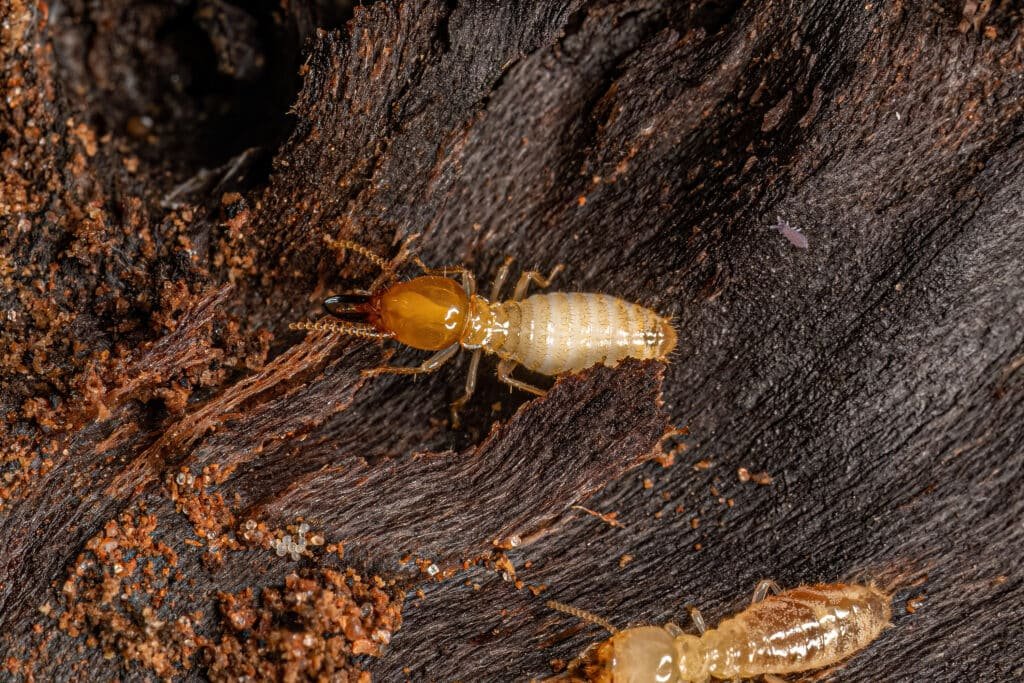
To understand why termite detection in Melbourne is so challenging, it helps to understand how termites are built. Termites are photophobic, meaning they actively avoid light and open air. Every feeding tunnel, every colony expansion, and every new entry point is constructed entirely within protected, enclosed environments. Nothing about their behaviour brings them into the open.
Subterranean termites
The most destructive and common species found in Melbourne properties travel underground through soil before entering a structure. There is no visible trail between the nest and the timber being consumed. They can enter a home through a gap as small as 1.5mm in a concrete slab, through expansion joints, through weep holes in brickwork, or through direct soil contact with timber in the subfloor, all completely invisible from outside the home.
Drywood termites
There is a different but equally concealed problem. Rather than nesting in the soil and travelling to timber, drywood termites nest entirely within the timber they are consuming. A drywood termite colony can live and feed inside a roof beam, door frame, or wall stud for years, with the only external sign being small piles of frass that most homeowners mistake for sawdust or general debris
The Biggest Mistakes Melbourne Homeowners Make That Allow Termites to Go Unnoticed
The most dangerous assumption a Melbourne homeowner can make about termites is that they would know if they had them. This belief, combined with a handful of persistent misconceptions, is responsible for a significant portion of the severe termite damage seen across Melbourne properties every year.
Assuming a brick home is safe is one of the most common and costly mistakes. Brick veneer construction, which accounts for a large proportion of Melbourne’s residential housing stock, still contains substantial timber framing inside every wall, across the entire roof void, and throughout the subfloor structure. Termites do not need to get through the brick. They enter through the subfloor, through weep holes, or through soil contact with internal timbers, and feed on the frame, entirely hidden behind the brick exterior.
Relying on visual checks alone is equally problematic. A homeowner walking around their property looking for obvious signs will rarely detect an active termite infestation. All feeding activity happens inside timber and underground. The surface of an infested wall or floor looks completely normal right up until the damage becomes structurally significant.
Ignoring garden beds, timber sleepers, and tree stumps near the home is another mistake that regularly leads to undetected infestations. These features create direct soil-to-timber contact adjacent to the structure, giving termite colonies an easy and concealed pathway into the building that can go unnoticed for years.
Skipping annual pest inspections because nothing looks wrong is perhaps the most consequential mistake of all. The absence of visible signs is not evidence that termites are absent. It is simply evidence that they have not yet been detected.
The Signs of Termites That Homeowners Almost Always Miss
There are signs of termite activity present in many infested Melbourne homes long before serious damage becomes visible. The problem is that most homeowners either do not know what to look for or consistently mistake these signs for something entirely unrelated.
The most commonly overlooked signs of termites include:
- Mud tubes along foundations and inside subfloor cavities – pencil-width tunnels of compacted soil and termite secretion running along walls, piers, or concrete edges. These are frequently dismissed as dirt marks or noticed but not identified as a termite indicator.
- A hollow sound when tapping timber – one of the clearest physical signs of termite consumption inside a surface, yet most homeowners tap a wall or floorboard, register a slightly hollow sound, and move on without connecting it to termite activity.
- Doors and windows are becoming harder to open – the moisture produced by termite activity inside wall frames causes timber to swell subtly, affecting the fit of door and window frames before any visual damage is apparent.
- Drywood termite frass near skirting boards – small pellet-like droppings pushed out of tiny holes in infested timber are consistently mistaken for sawdust, dirt, or general household debris by homeowners who have never been told what termite frass looks like
- Discarded wings near windowsills and doorways – during swarming season, reproductive termites shed their wings after finding a new nesting site. Small piles of translucent wings near entry points are a clear sign that a new colony has recently established nearby, yet most homeowners sweep them away without a second thought.
Each of these signs, when identified early by a qualified pest exterminator, represents an opportunity to address a termite infestation before it reaches the structural timber that drives major repair costs.
Where Termites Hide Inside a Melbourne Home That Homeowners Never Check
Where termites hide inside a property is almost always in the spaces homeowners access least. This is not coincidental. Termites actively seek out dark, undisturbed, humid environments, and residential properties are full of them.
The highest risk locations that consistently go unchecked include:
- Roof voids – warm, dark, and rarely accessed by homeowners, roof spaces are among the most common locations for established termite activity. Both subterranean and drywood termites establish feeding sites in roof framing that can remain completely undetected for years without a professional pest inspection.
- Subfloor cavities – homes with suspended timber floors sit above a subfloor space with direct soil exposure below. Subterranean termites access floor joists and bearers from below, consuming structural timber while the floor surface above shows no visible change until damage is already advanced.
- Inside wall cavities – termites travel vertically through internal wall frames, consuming studs and noggings from within, while the plasterboard surface remains smooth and undamaged in appearance throughout
- Behind built-in cabinetry and bathroom vanities – fixed furniture creates dark, undisturbed spaces where termite mud workings can develop and expand without ever being seen during routine cleaning or maintenance.
Pergolas, decking, and fence lines connected to the home – external timber structures attached to or in contact with the main building give termites a direct, concealed pathway into the structure that bypasses standard inspection points entirely
What You Should Do to Detect Termites Before the Damage Finds You
Schedule an Annual Professional Termite Inspection
Australian Standard AS 3660.2 recommends a minimum of one professional pest inspection every 12 months for all residential properties. In higher-risk Melbourne areas or properties with a history of termite activity, more frequent inspections provide a stronger level of protection. A licensed technician uses detection equipment that finds activity invisible to the naked eye, giving you a clear picture of your property’s status every year.
Remove Termite Entry Points Around Your Property
Clear garden beds away from external walls, remove timber sleepers and tree stumps within several metres of the structure, and ensure firewood and timber offcuts are stored away from the home entirely. Eliminating soil-to-timber contact around the perimeter of your property removes the most common pathways termites use to enter undetected.
Check Your Subfloor and Roof Void Regularly
Access your subfloor and roof void at least once a year and look for mud tubes, damaged timber, and moisture buildup. These two spaces are where termite activity most commonly establishes before spreading into the main structure, and a basic annual check by a homeowner can occasionally identify early warning signs between professional inspections.
Know Your Termite Protection Status
Confirm whether your property has an active termite barrier or baiting system in place, when it was last professionally inspected, and whether it remains within its effective lifespan. An expired or uninspected barrier provides no protection. Your pest control services provider should have records of previous treatment dates and can advise on renewal requirements.
Act on Any Suspicion Immediately
If you notice hollow-sounding timber, mud tubes, tight-fitting doors or windows, frass near skirting boards, or discarded wings near entry points, contact Apex Pest Control for a same-day pest inspection before the situation develops further. Early intervention by a qualified termite exterminator is always significantly less costly than addressing damage that has been allowed to progress.
Conclusion
Termites are not hard to spot because homeowners miss the obvious. They are hard to spot because they are biologically built to stay hidden, and the signs they do leave behind are ones most people have never been taught to recognise. Relying on visual checks alone or assuming your property is safe because nothing looks wrong are the two most costly approaches a Melbourne homeowner can take. Apex Pest Control provides professional termite treatment and same-day pest inspections across Melbourne using detection equipment that finds activity long before it becomes visible. If your property has not had a professional termite inspection in the past 12 months, now is the time to book one.
Frequently Asked Questions
How do termites stay hidden inside a home for so long without being detected?
Termites are photophobic and avoid light and open air entirely, meaning all feeding and colony expansion happens inside timber, underground, or within sealed mud workings. They feed from the inside of timber outward, leaving the surface intact, so no visible damage appears until consumption is already advanced. Without professional detection equipment such as thermal imaging and moisture metres, active termite activity can remain completely invisible to a homeowner for months or years.
Can termites be present in a brick home in Melbourne?
Yes. Brick veneer homes, which make up a significant proportion of Melbourne’s housing stock, still contain extensive internal timber framing inside walls, across roof voids, and throughout subfloor structures. Termites do not need to penetrate the brick itself. They enter through weep holes, subfloor soil contact, or expansion joints and feed on the internal timber frame, entirely hidden behind the brick exterior. A professional pest inspection is just as important for brick homes as for fully timber-framed properties.
What are the earliest signs of termite activity most homeowners miss?
The earliest signs most commonly overlooked include mud tubes along foundation edges and subfloor piers, a hollow sound when tapping timber surfaces, doors or windows becoming subtly harder to open, small piles of pellet-like frass near skirting boards, and discarded wings near windowsills or doorways following swarming season. Each of these signs is frequently dismissed or attributed to other causes, allowing termite activity to continue undetected.
How is a professional termite inspection different from checking yourself?
A professional pest inspection uses thermal imaging cameras to detect heat variations caused by termite activity within walls and ceilings, moisture metres to identify damp conditions termites create within timber, and acoustic detection devices that pick up the sound of termite movement within structural elements. These tools identify activity that is completely invisible to the naked eye and inaccessible to a standard visual check, making professional inspection the only reliable method of early termite detection in Melbourne.
Can drywood termites and subterranean termites both be present in the same Melbourne home?
Yes, though it is not common. Subterranean termites are by far the most frequently encountered species in Melbourne, entering from the soil and nesting underground. Drywood termites nest entirely within the timber they consume and are more commonly found in roof timbers and door frames. In some Melbourne properties, particularly older homes with varied timber types and entry points, both species can be present simultaneously in different areas of the structure, making a thorough full-property inspection essential.
How often should Melbourne homeowners get a termite inspection if they have no visible signs?
Australian Standard AS 3660.2 recommends a minimum of one professional termite inspection every 12 months, regardless of whether visible signs are present. Properties in higher-risk areas of Melbourne, homes near bushland or with established gardens, and properties with a history of previous termite activity should consider inspections every six months. The absence of visible signs does not indicate the absence of termites – it simply means they have not yet been detected without the right equipment.